
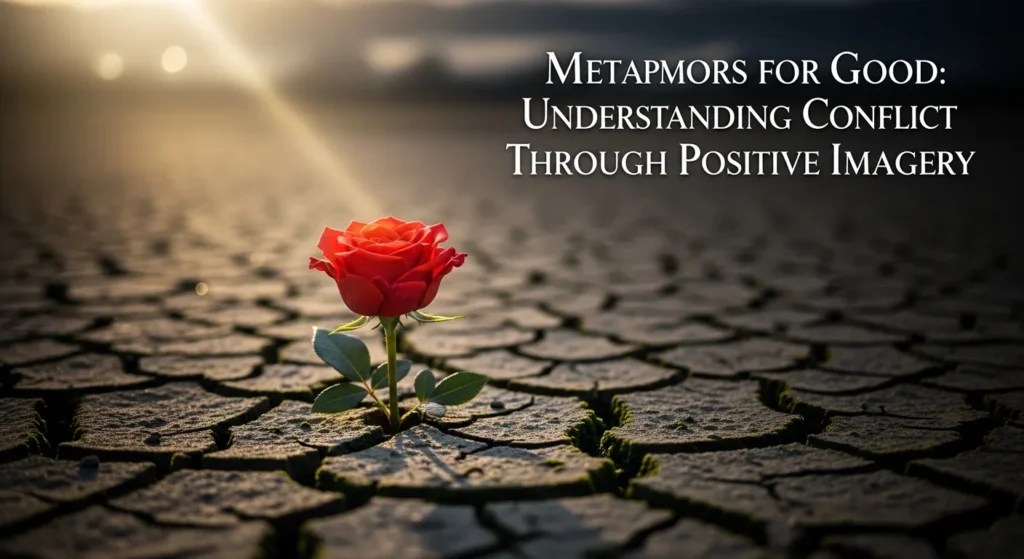
Conflict is a natural part of human life. It arises when values clash, goals compete, emotions intensify, or perspectives differ. Whether in personal relationships, workplaces, or communities, conflict often feels abstract and overwhelming. That’s where metaphors become powerful. Metaphors transform invisible emotional tension into vivid, relatable images. By comparing conflict—or the “good” that emerges from it—to something concrete, we make
sense of complex experiences more clearly.
Metaphors for good are especially meaningful because they help us see growth, healing,
resilience, and moral strength even in difficult moments. They shift our perspective from struggle to possibility. Below are 22 carefully explained metaphors that illuminate how “good”
can be understood in emotional, personal, professional, and social contexts.
1. Good as a Guiding Light
Meaning: Good provides direction and clarity in confusing or tense situations. Example: “Her honesty was a guiding light during the company’s crisis.” Alternatives: Beacon of hope, shining star, moral compass. Insight: This metaphor reassures us that goodness reduces uncertainty and brings psychological safety.
2. Good as a Bridge
Meaning: Good connects divided people or opposing viewpoints. Example: “His empathy became a bridge between the feuding neighbors.” Alternatives: Link, connector, pathway. Insight: Viewing goodness as a bridge emphasizes reconciliation and social harmony.
3. Good as a Seed
Meaning: Good actions may start small but grow over time. Example: “Her small act of kindness planted a seed of trust.” Alternatives: Spark of growth, budding change. Insight: This metaphor highlights patience and long-term impact in conflict resolution.
4. Good as a Shield
Meaning: Good protects people from harm or negativity. Example: “Integrity served as his shield against corruption.” Alternatives: Armor, safeguard, protection. Insight: Psychologically, this metaphor frames morality as strength rather than vulnerability.
5. Good as a Healing Balm
Meaning: Good soothes emotional wounds. Example: “Her apology was a healing balm after the argument.” Alternatives: Remedy, salve, comfort. Insight: It reinforces the restorative power of compassion in personal conflicts.
6. Good as a Compass
Meaning: Good provides moral direction. Example: “In tough negotiations, fairness acted as their compass.” Alternatives: Moral guide, inner guide. Insight: This metaphor emphasizes ethical stability in professional settings.
7. Good as a Lighthouse
Meaning: Good stands firm amid chaos. Example: “During the layoffs, her leadership was a lighthouse.” Alternatives: Beacon, tower of strength. Insight: It suggests reliability during emotional storms.
8. Good as a Garden
Meaning: Good must be nurtured and maintained. Example: “Trust in a relationship is a garden that needs care.” Alternatives: Field of growth, cultivated space. Insight: This metaphor stresses ongoing effort in social harmony.
9. Good as Sunshine
Meaning: Good brightens and energizes situations. Example: “His optimism was sunshine in a tense meeting.” Alternatives: Warmth, ray of hope. Insight: Sunshine symbolizes emotional uplift and renewed perspective.
10. Good as a Foundation
Meaning: Good creates stability for future growth. Example: “Honesty is the foundation of teamwork.” Alternatives: Cornerstone, base, groundwork. Insight: It highlights structural importance in long-term relationships.
11. Good as a Flame
Meaning: Good inspires passion and courage. Example: “Her courage ignited a flame of change.” Alternatives: Spark, fire of hope. Insight: Fire represents both energy and transformative power.
12. Good as a River
Meaning: Good flows continuously and adapts. Example: “Kindness flowed through the community like a river.” Alternatives: Stream of generosity, current of care. Insight: It shows resilience and movement despite obstacles.
13. Good as a Pillar
Meaning: Good supports others reliably. Example: “He became a pillar for his grieving family.” Alternatives: Backbone, support beam. Insight: This metaphor emphasizes emotional dependability.
14. Good as a Mirror
Meaning: Good reflects our highest values. Example: “Her actions were a mirror of her principles.” Alternatives: Reflection of integrity. Insight: Encourages self-awareness and authenticity.
15. Good as a Shielding Tree
Meaning: Good provides shelter and protection. Example: “The community center became a tree offering shade in hard times.” Alternatives: Safe haven, sheltering presence. Insight: Suggests safety and belonging in social conflicts.
16. Good as a Key
Meaning: Good unlocks solutions. Example: “Patience was the key to resolving the dispute.” Alternatives: Solution, opener. Insight: Highlights practical problem-solving power.
17. Good as a Thread
Meaning: Good ties people together. Example: “Shared respect was the thread holding the team together.” Alternatives: Bond, tie, connection. Insight: Emphasizes unity in diversity.
18. Good as a Mountain
Meaning: Good stands firm and unmovable. Example: “Her principles were a mountain in shifting politics.” Alternatives: Rock, fortress. Insight: Reflects psychological strength and consistency.
19. Good as a Candle
Meaning: Even small goodness can dispel darkness. Example: “One honest voice was a candle in the debate.” Alternatives: Flicker of hope, small light. Insight: Encourages individual moral courage.
20. Good as a Harvest
Meaning: Good yields rewards after effort. Example: “Years of fairness resulted in a harvest of loyalty.” Alternatives: Fruit of labor, reward of integrity. Insight: Connects morality with long-term outcomes.
21. Good as a Song
Meaning: Good brings harmony. Example: “Their cooperation turned conflict into a song.” Alternatives: Harmony, symphony. Insight: Suggests emotional alignment and balance.
22. Good as an Anchor
Meaning: Good keeps people steady during turbulence. Example: “Trust acted as an anchor in uncertain times.” Alternatives: Stability, grounding force. Insight: Reinforces emotional security during professional or personal storms.
Using These Metaphors Effectively

1. In Writing
Choose metaphors that match the emotional tone of your scene or argument. For essays or
storytelling, metaphors like “garden” or “harvest” work well for growth themes, while “anchor”
or “mountain” suit resilience.
2. In Speeches
Metaphors create memorable imagery. Saying “Integrity is our compass” is more powerful
than simply stating “We must act ethically.”
3. In Everyday Communication
Metaphors help express feelings clearly. Telling someone “Your support was my lighthouse”
communicates gratitude more vividly than a plain “Thank you.”
When using metaphors:
- Avoid mixing conflicting images.
- Keep them culturally understandable.
- Use them sparingly for stronger impact.
Famous Uses of Conflict and Goodness Metaphors
Writers and leaders have long used metaphors to frame conflict and goodness powerfully:
- In To Kill a Mockingbird by Harper Lee, moral courage is portrayed as a quiet but steady
- force against injustice.
- Martin Luther King Jr. described justice as light overcoming darkness in his speeches.
- In The Diary of a Young Girl by Anne Frank, hope shines despite conflict and fear.
These examples show how metaphors frame goodness as resilient and transformative.
Frequently Asked Questions (FAQ)
1. Why are metaphors important in understanding conflict?
They turn abstract emotions into clear images, making complex tensions easier to understand.
2. Can metaphors really change how people feel about conflict?
Yes. Positive metaphors shift focus from fear to possibility and growth.
3. Are metaphors useful in professional settings?
Absolutely. Leaders often use metaphors to inspire unity and shared values.
4. How do I avoid overusing metaphors?
Choose one strong image per idea. Avoid stacking too many in a single paragraph.
5. Can students use these metaphors in essays?
Yes, especially in reflective or persuasive writing where emotional clarity matters.
Conclusion
Metaphors shape the way we perceive reality. By describing good as light, bridges, gardens, or
anchors, we transform conflict from a source of fear into a space for growth
and understanding. These images deepen empathy, clarify emotions, and strengthen communication. For students, writers, leaders, and everyday communicators, metaphors are
not decorative language—they are tools for insight. When used thoughtfully, they illuminate
not only conflict but the goodness that can emerge from it.