
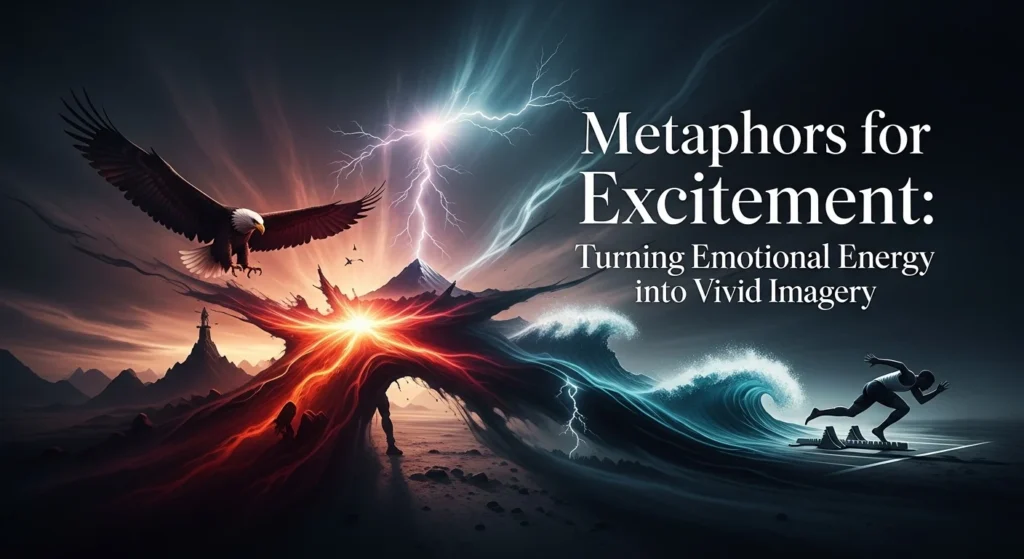
Excitement is a powerful emotional surge—an internal rise of anticipation, joy, nervous
energy, or passionate expectation. Yet like many emotions, it can be difficult to describe precisely. That’s where metaphors become essential. A metaphor transforms abstract emotional intensity into concrete, sensory imagery. Instead of merely saying “I’m excited,” we say, “I’m buzzing like a live wire” or “My heart is racing like a drum.”
Metaphors help us understand not only emotional highs but also the tension that
often accompanies them—whether in personal milestones, professional opportunities, social
gatherings, or competitive situations. By comparing excitement to fire, storms, electricity, or
flight, we make invisible energy visible and relatable.
Below is a carefully structured list of 22 metaphors for excitement, each with
meaning, example usage, alternative expressions, and insight into its emotional relevance.
1. A Fire in the Veins
Meaning: A surge of intense energy or passion. Example: When she heard her name announced as the winner, it felt like a fire in her veins. Alternatives: Burning with anticipation, inflamed with excitement. Insight: Fire suggests both warmth and danger—excitement can energize but also overwhelm.
2. Butterflies in the Stomach
Meaning: Nervous excitement before an event. Example: He felt butterflies in his stomach before stepping onto the stage. Alternatives: A fluttering heart, nervous tremors. Insight: This metaphor captures how excitement often blends with anxiety.
3. A Spark Igniting
Meaning: The sudden beginning of enthusiasm. Example: The idea sparked something inside her. Alternatives: Lighting a flame, striking a match. Insight: Sparks symbolize beginnings—small moments that grow into larger passion.
4. A Racing Heart
Meaning: Heightened physical response to anticipation. Example: Her heart raced as she opened the acceptance email. Alternatives: Pulse pounding, heart thundering. Insight: Connects emotional experience to physical sensation.
5. On Cloud Nine
Meaning: Overwhelming happiness and delight. Example: He was on cloud nine after hearing the good news. Alternatives: Walking on air, floating above the ground. Insight: Elevation imagery reflects emotional uplift.
6. A Live Wire
Meaning: Charged with dynamic energy. Example: She was a live wire during the championship match. Alternatives: Electrified, buzzing with energy. Insight: Electricity implies unpredictability and power.
7. A Ticking Clock
Meaning: Excitement mixed with anticipation or urgency. Example: The countdown to the launch felt like a ticking clock in his mind. Alternatives: Countdown drumbeat, time bomb of anticipation. Insight: Highlights tension within excitement.
8. A Firework Ready to Burst
Meaning: Emotion about to explode outward. Example: He was a firework ready to burst when he saw his family waiting. Alternatives: About to explode, brimming over. Insight: Suggests spectacle and intensity.
9. A Roller Coaster Ride
Meaning: Emotional highs and lows. Example: The job interview process was a roller coaster ride of excitement. Alternatives: Emotional whirlwind, wild ride. Insight: Captures instability and thrill simultaneously.
10. A Storm Brewing
Meaning: Rising excitement that builds gradually. Example: You could feel a storm brewing before the final whistle. Alternatives: Gathering momentum, building tension. Insight: Storms represent power gathering beneath the surface.
11. Fireworks in the Sky
Meaning: Dramatic and joyful excitement. Example: Seeing her success felt like fireworks in the sky. Alternatives: A burst of color, celebratory explosion. Insight: Fireworks are communal and public expressions of joy.
12. A Lightning Bolt
Meaning: Sudden, intense excitement. Example: The opportunity hit him like a lightning bolt. Alternatives: Shockwave of joy, electric jolt. Insight: Lightning conveys speed and intensity.
13. A Rising Tide
Meaning: Gradually increasing enthusiasm. Example: Excitement rose like a tide in the stadium. Alternatives: Swelling wave, growing current. Insight: Suggests collective emotion building together.
14. A Caged Bird Ready to Fly
Meaning: Restless, eager anticipation. Example: She felt like a caged bird ready to fly before graduation. Alternatives: Eager to break free, wings fluttering. Insight: Combines excitement with longing for release.
15. A Drumroll
Meaning: Suspenseful anticipation before a reveal. Example: The silence before the announcement felt like a drumroll. Alternatives: Holding breath, suspense hanging. Insight: Emphasizes buildup and collective attention.
16. A Volcano About to Erupt
Meaning: Powerful emotion nearing explosion. Example: He was a volcano about to erupt with excitement. Alternatives: Bursting at the seams, overflowing energy. Insight: Suggests both intensity and inevitability.
17. A Shooting Star
Meaning: Brief but dazzling excitement. Example: The surprise party was a shooting star of joy. Alternatives: Flash of brilliance, fleeting sparkle. Insight: Highlights the temporary yet unforgettable nature of some moments.
18. A Wave Crashing Ashore
Meaning: Overwhelming surge of emotion. Example: Relief and excitement crashed over her like a wave. Alternatives: Flood of joy, emotional surge. Insight: Water imagery conveys immersion and power.
19. A Balloon Ready to Pop
Meaning: Overfilled with anticipation. Example: He felt like a balloon ready to pop before opening the envelope. Alternatives: Brimming over, bursting with excitement. Insight: Illustrates emotional pressure building inside.
20. A Rocket Launch
Meaning: Sudden upward surge of enthusiasm. Example: Her confidence soared like a rocket launch. Alternatives: Skyrocketing joy, blasting off. Insight: Suggests ambition, momentum, and forward motion.
21. A Festival of Lights
Meaning: Bright, shared excitement. Example: The wedding celebration felt like a festival of lights. Alternatives: Carnival of joy, glowing celebration. Insight: Emphasizes communal happiness and spectacle.
22. A Symphony Crescendo
Meaning: Excitement building toward a peak. Example: The crowd’s cheers rose like a symphony crescendo. Alternatives: Building harmony, swelling climax. Insight: Music metaphors reflect rhythm and emotional escalation.
Using These Metaphors Effectively
1. In Writing
- Use metaphors to show emotion instead of simply naming it.
- Match the metaphor to the tone—professional writing may favor “rising tide” over
“balloon ready to pop.” - Avoid mixing unrelated imagery (e.g., fire and ocean in one sentence).
2. In Speeches
- Choose metaphors that your audience can visualize easily.
- Repeat a central metaphor for emphasis (e.g., “This is our rocket launch moment”).
- Use dynamic metaphors to energize listeners.
3. In Everyday Communication
- Light metaphors make conversations vivid and relatable.
- Shared imagery builds connection (“We’re all on this roller coaster together”).
- Keep metaphors simple and natural.
Famous Uses of Conflict and Emotional Metaphors
Writers and leaders have long relied on metaphor to express emotional intensity and
conflict:
- William Shakespeare frequently used storm imagery to depict emotional turmoil,
especially in King Lear. - Martin Luther King Jr. used metaphors of mountains and valleys to describe
social struggle and hope. - Winston Churchill used battle metaphors to rally public courage during wartime.
Though often used for conflict, the same imagery—storms, fire, rising tides—also
conveys excitement and collective anticipation.
FAQ
1. Why use metaphors instead of simple descriptions? Metaphors make emotions easier to visualize and feel. They turn abstract ideas into concrete images.
2. Are metaphors appropriate in professional writing? Yes, when used carefully and sparingly. Choose subtle, clear imagery.
3. Can metaphors be overused? Absolutely. Too many mixed metaphors can confuse readers.
4. How do I create my own metaphor for excitement? Think about physical sensations (heat,
speed, light) and compare them to natural or everyday experiences.
5. Are metaphors culturally specific? Some are universal (fire, storms), while others may depend on shared experiences.
Conclusion
Excitement is more than heightened happiness—it is emotional energy in motion. Metaphors give shape, color, and texture to that energy. By comparing excitement to fire, flight, storms,
music, and light, we transform invisible feelings into shared understanding.
Whether in storytelling, speeches, or daily conversation, metaphors sharpen perception and deepen empathy. They help us communicate emotional tension and release with clarity and
resonance—reminding us that language is not just a tool for description, but a bridge between
inner experience and shared human understanding.