
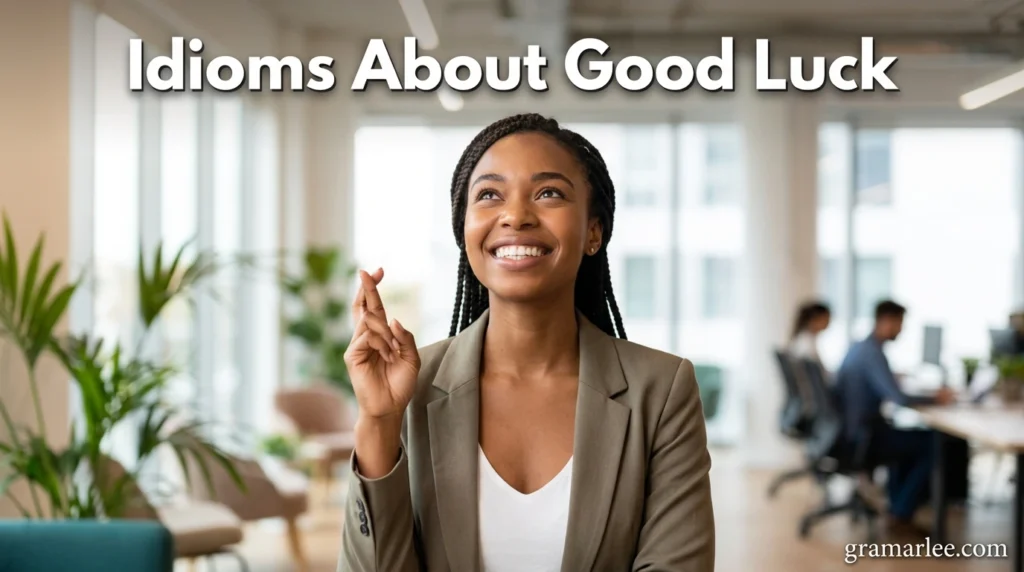
Idioms about good luck are powerful expressions that help English learners sound more natural, confident, and fluent in everyday communication. These phrases are widely used in conversations, movies, workplaces, and exams, making them essential for anyone learning English.
Understanding idioms related to luck not only improves your vocabulary but also helps you express emotions like hope, excitement, and encouragement more effectively.
In real life, these idioms are used when wishing someone success, talking about unexpected opportunities, or describing fortunate situations. By mastering them, you can communicate more naturally and impressively in both casual and professional settings.
1. Importance of Learning Idioms About Good Luck
Learning idioms about good luck is important because they are deeply embedded in everyday English communication. Native speakers often use idiomatic expressions instead of direct sentences.
For example:
- Instead of saying “I hope you succeed,” people say “Break a leg!”
- Instead of “I hope everything goes well,” they say “Cross your fingers.”
Why they matter:
- Improve speaking fluency
- Help you understand native conversations
- Make writing more expressive
- Build confidence in exams and interviews
Real-life benefit:
If you are in a job interview or giving a presentation, knowing these idioms helps you understand encouragement and respond naturally.
2. What Are Idioms About Good Luck?
Idioms about good luck are phrases whose meanings are different from the literal words. They express hope, success, fortune, or positive outcomes.
Examples:
- Break a leg → Good luck (especially in performances)
- Cross your fingers → Hope for a good result
- Lucky break → A sudden opportunity
Key feature:
They are figurative expressions, meaning you cannot understand them word by word.
Fun fact:
Many luck-related idioms come from old traditions, superstitions, and theater culture.
3. Break a Leg – Meaning, Usage, and Examples
Meaning: A way to wish someone good luck, especially before a performance or presentation.
Example sentences:
- “You have a big stage performance tonight—break a leg!”
- “My teacher said break a leg before my speech competition.”
Origin:
It comes from theater superstition. Actors believe saying “good luck” brings bad luck, so they use the opposite phrase.
Alternative expressions:
- Good luck!
- You’ll do great!
- All the best!
When to use:
- Drama performances
- Public speaking
- Exams or competitions
4. Cross Your Fingers – Hope and Good Luck Expression
Meaning: To hope that something goes well or turns out successfully.
Example sentences:
- “I’m crossing my fingers for your exam results.”
- “Let’s cross our fingers that the weather stays sunny.”
Origin:
It comes from an old belief that crossing fingers brings protection and good fortune.
Alternative expressions:
- Hope for the best
- Wish me luck
- Fingers crossed
Common use cases:
- Waiting for results
- Job interviews
- Travel plans
5. Knock on Wood – Avoiding Bad Luck Beliefs
Meaning: Said after mentioning something good to avoid bad luck.
Example sentences:
- “I haven’t been sick this year, knock on wood.”
- “Everything is going well so far, knock on wood.”
Origin:
This idiom comes from ancient belief that spirits live in trees, and knocking on wood brings protection.
Alternative expressions:
- Hope it stays that way
- Let’s hope for the best
When to use:
- After talking about success
- When expressing optimism
6. Lucky Break and Lucky Streak – Sudden Success
Lucky Break Meaning:
A sudden and unexpected opportunity that brings success.
Example:
- “She got a lucky break when she was selected for the scholarship.”
Lucky Streak Meaning:
A series of continuous good luck events.
Example:
- “He’s on a lucky streak—he won three games in a row.”
Alternative expressions:
- Stroke of luck
- Winning run
Use cases:
- Sports
- Career opportunities
- Gambling or games
7. Born Under a Lucky Star & Strike It Lucky
Born Under a Lucky Star:
Meaning: Someone who naturally experiences good fortune.
Example:
- “He seems born under a lucky star; everything works out for him.”
Strike It Lucky:
Meaning: To suddenly become successful or wealthy.
Example:
- “She struck it lucky when she started her own business.”
Alternative expressions:
- Naturally fortunate
- Instant success
Fun fact:
These expressions are often used in storytelling and motivational speech.
8. Hit the Jackpot & Windfall Expressions
Hit the Jackpot:
Meaning: Achieve great success or gain a big reward unexpectedly.
Example:
- “He hit the jackpot with that investment.”
Windfall:
Meaning: A sudden large amount of money or good fortune.
Example:
- “They received a windfall after selling their land.”
Alternative expressions:
- Big win
- Unexpected gain
Common scenarios:
- Lottery
- Business success
- Inheritance
9. Fortune Favors the Brave – Motivational Proverb
Meaning: People who take risks are more likely to succeed.
Example:
- “She applied for the job abroad because fortune favors the brave.”
Origin:
This phrase comes from ancient Roman philosophy.
Alternative expressions:
- No risk, no reward
- Be bold to succeed
Usage:
- Motivation speeches
- Business decisions
- Personal growth discussions
10. In the Right Place at the Right Time
Meaning: Being in a situation where good luck happens unexpectedly.
Example:
- “He got the job because he was in the right place at the right time.”
Alternative expressions:
- Perfect timing
- Lucky coincidence
When to use:
- Career success stories
- Accidental opportunities
Real-life example:
Meeting someone influential by chance and gaining an opportunity.
11. Pot of Gold at the End of the Rainbow
Meaning: A reward or success that is difficult to achieve but highly desirable.
Example:
- “Many people chase fame like a pot of gold at the end of the rainbow.”
Origin:
From Irish folklore about leprechauns and hidden treasure.
Alternative expressions:
- Dream reward
- Ultimate success
Use cases:
- Goals and ambitions
- Long-term dreams
12. Common Mistakes When Using Luck Idioms
Many learners misuse idioms because they translate word by word.
Mistakes:
- ❌ “Break my leg” instead of “Break a leg”
- ❌ Using “cross fingers” without “my/your”
- ❌ Misusing “knock wood” instead of “knock on wood”
Tips to avoid mistakes:
- Learn idioms as fixed expressions
- Practice with real sentences
- Watch movies or listen to native speakers
13. Grouping Idioms by Context
Formal Context:
- Fortune favors the brave
- A lucky break
Informal Context:
- Break a leg
- Fingers crossed
Business Context:
- Windfall
- Hit the jackpot
Daily Conversation:
- Knock on wood
- In the right place at the right time
Why grouping helps:
It improves memory and helps you choose the right expression in the right situation.
14. Interactive Quiz & Exercises
A. Fill in the blanks (Easy)
- ________ I pass my exam tomorrow.
- She had a ________ when she met the manager.
- He is ________ a lucky star.
Answers:
- Fingers crossed
- lucky break
- born under
B. Multiple Choice (Medium)
What does “hit the jackpot” mean? A. Lose everything B. Get unexpected success C. Travel a lot
Answer: B
C. Match the idiom (Advanced)
Match idioms with meanings:
- Knock on wood →
- Cross your fingers →
- Windfall →
A. Sudden money B. Avoid bad luck C. Hope for success
Answers: 1-B, 2-C, 3-A
15. Tips to Use Idioms Naturally in Speaking & Writing + Conclusion
Tips for Natural Usage:
- Use idioms in the right context, not randomly
- Don’t overuse them in one conversation
- Learn pronunciation along with meaning
- Practice in real-life dialogues
- Watch English shows for natural usage
Common Advice:
Start with 3–5 idioms and gradually expand your list instead of memorizing all at once.
16. Beginner-Friendly Idioms About Good Luck (Easy Level List)
For beginners, it is important to start with simple and frequently used idioms. These expressions are short, easy to remember, and commonly used in daily conversations.
1. Good Luck!
Meaning: A direct wish for success. Example: “Good luck in your exam!” Alternative: Best of luck, All the best Use case: Exams, interviews, competitions
2. Fingers Crossed
Meaning: Hoping for a positive result. Example: “Fingers crossed for your interview!” Alternative: Hope for the best Use case: Waiting for results or outcomes
3. Break a Leg
(Already explained in detail earlier)
4. Wish Me Luck
Meaning: Asking others to hope for your success. Example: “I have a driving test today—wish me luck!” Alternative: Send me good vibes Use case: Before challenges or important events
17. Advanced Idioms About Good Luck (Professional Level)
Advanced learners can use these idioms to sound more fluent, polished, and expressive in professional or academic settings.
1. Fortune Smiles on Someone
Meaning: Someone experiences good luck or success. Example: “Fortune smiled on him when he got the promotion.” Alternative: Lucky break, Good fortune Use case: Business, career success
2. Lady Luck Is on Your Side
Meaning: You are experiencing good luck. Example: “Lady luck is on your side today!” Origin: Based on “Lady Luck,” a personification of fortune in mythology Use case: Sports, competitions
3. Be in Luck
Meaning: To be lucky or fortunate in a situation. Example: “You’re in luck—the store is still open.” Alternative: You’re lucky Use case: Everyday conversations, customer service
4. As Luck Would Have It
Meaning: By chance or unexpectedly. Example: “As luck would have it, I met my old friend at the airport.” Use case: Storytelling, narration
18. Idioms About Good Luck in Business and Career
Good luck idioms are often used in professional communication, especially in business success stories and career growth discussions.
1. Strike Gold
Meaning: Achieve great success or profit. Example: “The company struck gold with its new product.” Alternative: Hit the jackpot Use case: Business achievements
2. Cash In on Good Fortune
Meaning: To take advantage of a lucky situation. Example: “He cashed in on good fortune by investing early.” Use case: Finance, entrepreneurship
3. Get a Foot in the Door
Meaning: Get an initial opportunity that leads to success. Example: “She got a foot in the door at a top company.” Use case: Jobs, internships
4. Ride the Wave of Success
Meaning: Continue benefiting from ongoing success. Example: “The startup is riding the wave of success after its launch.” Use case: Business growth
19. Idioms About Unexpected Good Luck Events
These idioms describe surprising or accidental lucky situations.
1. Out of the Blue
Meaning: Something happens unexpectedly. Example: “He got a job offer out of the blue.” Alternative: Suddenly, unexpectedly Use case: Life changes, surprises
2. Like a Bolt from the Blue
Meaning: A sudden and surprising event. Example: “The news came like a bolt from the blue.” Use case: Important announcements
3. Pure Chance
Meaning: Something happens completely by luck. Example: “We met by pure chance.” Use case: Everyday storytelling
4. A Stroke of Fate
Meaning: A powerful and unexpected event influenced by destiny. Example: “It was a stroke of fate that changed his life.” Use case: Emotional or dramatic storytelling
20. Cultural Origins of Good Luck Idioms
Many idioms about good luck come from ancient traditions, beliefs, and cultural practices.
Theater Superstitions
- “Break a leg” comes from actors avoiding bad luck by saying the opposite.
Ancient Beliefs
- “Knock on wood” comes from the idea that trees protect humans from evil spirits.
Mythology
- “Lady Luck” originates from Roman and Greek personifications of fortune.
Folklore
- “Pot of gold at the end of the rainbow” comes from Irish legends about leprechauns.
Why this matters:
Understanding origins helps learners remember idioms more easily and use them correctly.
21. How to Practice Idioms About Good Luck Effectively
Learning idioms is not enough—you must practice them actively.
1. Daily Sentence Writing
Write 3 sentences using new idioms every day.
2. Speaking Practice
Use idioms in daily conversations with friends or classmates.
3. Watching English Media
Movies, dramas, and YouTube videos show natural usage.
4. Flashcards Method
Create cards with idiom on one side and meaning on the other.
5. Story Creation
Write short stories using at least 5 idioms.
22. Common Misunderstandings About Good Luck Idioms
Many learners misunderstand idioms due to literal translation.
Mistake 1:
Thinking “break a leg” is harmful. ✔ Correct: It means good luck.
Mistake 2:
Using idioms word-by-word translation. ✔ Correct: Learn full expressions.
Mistake 3:
Overusing idioms in formal writing. ✔ Correct: Use carefully depending on context.
Tip:
Always learn idioms as fixed phrases, not individual words.
23. Visual Learning Ideas for Idioms About Good Luck
Visual aids make idioms easier to remember.
Suggested visuals:
- 🎭 Theater stage (Break a leg)
- 🍀 Four-leaf clover (Good luck symbols)
- 🌈 Rainbow with treasure (Pot of gold)
- 🤞 Crossed fingers emoji (Hope)
- 🪵 Wood texture (Knock on wood)
Infographic idea:
Create a chart with:
- Idiom
- Meaning
- Example
- Image icon
24. Summary of Expanded Idioms About Good Luck
To summarize, idioms about good luck are powerful expressions used in daily English communication. They help you:
- Express hope and success naturally
- Improve fluency in speaking and writing
- Understand native speakers better
- Communicate in both formal and informal contexts
From simple phrases like “Good luck” to advanced expressions like “Fortune smiles on someone,” each idiom adds depth to your English skills.
Conclusion
Idioms about good luck are essential tools for expressing hope, success, and positive emotions in English. They make your communication more natural, expressive, and culturally rich.
From “Break a leg” to “Hit the jackpot,” each idiom carries a unique meaning and cultural background that helps you understand English more deeply.
By practicing regularly, using them in conversations, and avoiding common mistakes, you can confidently improve your fluency and sound more like a native speaker.
Remember, mastering idioms is not just about learning phrases—it’s about understanding how English speakers think and express luck, success, and opportunity in everyday life.
FAQs
1. What are idioms about good luck?
They are expressions that wish success or describe lucky situations in a figurative way, not literal meaning.
2. Why do we say “break a leg” for good luck?
It comes from theater superstition where saying “good luck” was believed to bring bad luck, so the opposite phrase is used.
3. What does “fingers crossed” mean?
It means hoping for a positive result or success in the future.
4. Is “knock on wood” a good luck idiom?
Yes, it is used to avoid bad luck after saying something positive.
5. What is the most common good luck idiom?
“Good luck,” “fingers crossed,” and “break a leg” are the most commonly used.
6. Can I use good luck idioms in formal writing?
Some idioms are fine in informal writing, but in formal writing it is better to use simpler phrases.
7. What does “hit the jackpot” mean?
It means achieving great success or gaining a big reward unexpectedly.
8. Are good luck idioms used in business English?
Yes, idioms like “strike gold” and “windfall” are common in business contexts.
9. What does “lady luck is on your side” mean?
It means someone is experiencing good fortune or success.
10. How can I learn idioms about good luck faster?
Practice daily sentences, watch English media, and use them in real conversations regularly.