
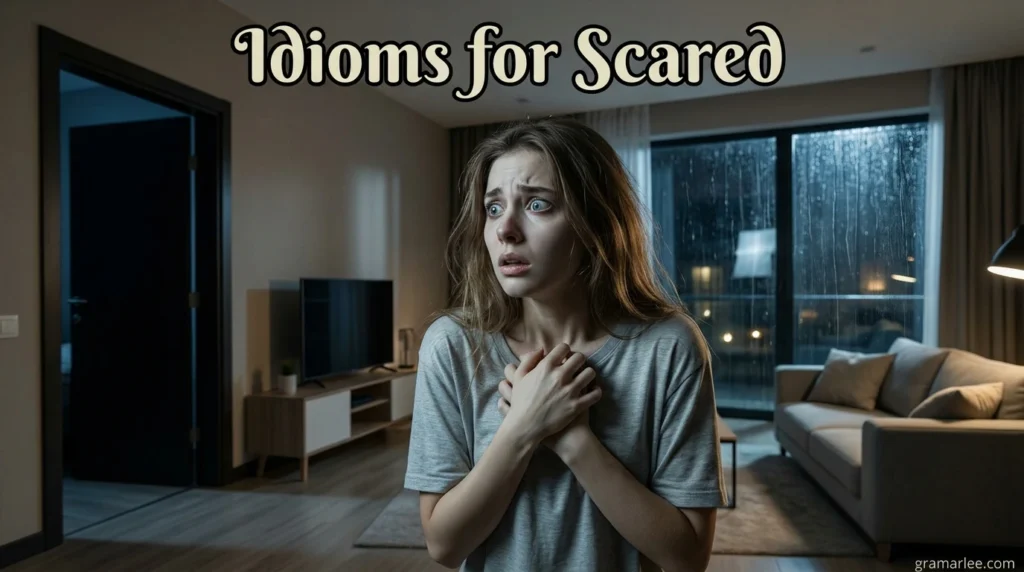
Fear is one of the most common human emotions, and English speakers use countless idioms to describe being scared, nervous, frightened, or shocked. Learning idioms for scared can help English learners understand movies, books, conversations, and everyday speech more naturally.
These expressions add color, emotion, and personality to communication, making your English sound more fluent and engaging.Whether you’re a student preparing for exams, a professional improving workplace communication, or simply someone who loves learning English, mastering fear-related idioms can greatly enhance your vocabulary.
In this guide, you’ll discover the meanings, examples, origins, usage tips, exercises, and common mistakes related to idioms for being scared.
What Are Idioms for Scared?
Idioms for scared are expressions whose meanings cannot always be understood from the individual words. Instead, they represent feelings of fear, anxiety, panic, nervousness, or shock.
Why Learn Fear Idioms?
- Improve speaking fluency
- Understand native speakers better
- Add emotion to your communication
- Perform better in English exams
- Enhance storytelling and writing skills
Example
Instead of saying:
I was very scared.
You can say:
I was shaking in my boots.
This sounds more natural and expressive.
Common Idioms for Scared Everyone Should Know
These are some of the most frequently used idioms related to fear.
Shake in Your Boots
Meaning: To be extremely frightened.
Example:
The students were shaking in their boots before the final exam.
Alternative Expressions:
- Tremble with fear
- Be terrified
Typical Use Cases:
- Exams
- Job interviews
- Public speaking
Scared Stiff
Meaning: So frightened that you cannot move.
Example:
The loud noise scared me stiff.
Alternative Expressions:
- Frozen with fear
- Terrified
Jump Out of Your Skin
Meaning: To become suddenly frightened.
Example:
I nearly jumped out of my skin when the door slammed.
Use Cases:
- Horror movies
- Surprises
- Sudden sounds
Idioms for Extreme Fear
Some situations create intense fear. These idioms express powerful emotions.
Petrified
Meaning: Extremely scared.
Example:
She was petrified of speaking in front of a crowd.
White as a Ghost
Meaning: Looking pale because of fear.
Example:
After hearing the bad news, he turned white as a ghost.
Frozen with Fear
Meaning: Unable to move due to fear.
Example:
The deer stood frozen with fear.
Fun Fact
The word “petrified” comes from the idea of turning into stone.
Idioms for Sudden Fear and Shock
Unexpected events often trigger fear instantly.
Get the Fright of Your Life
Meaning: Experience extreme fear.
Example:
I got the fright of my life when I saw a snake in the garden.
Make Someone’s Blood Run Cold
Meaning: Cause intense fear.
Example:
The horror story made my blood run cold.
Send Shivers Down Someone’s Spine
Meaning: Cause a chilling feeling of fear.
Example:
That scream sent shivers down my spine.
Idioms for Nervousness and Anxiety
Not all fear is extreme. Sometimes fear appears as nervousness.
Have Butterflies in Your Stomach
Meaning: Feel nervous.
Example:
I always have butterflies in my stomach before presentations.
On Edge
Meaning: Nervous and tense.
Example:
Everyone was on edge before the announcement.
Lose Your Nerve
Meaning: Become afraid and unable to continue.
Example:
He lost his nerve before the bungee jump.
Idioms for Fear in Dangerous Situations
These expressions often appear when someone faces risk.
Hold Your Breath
Meaning: Wait anxiously.
Example:
We held our breath while waiting for the results.
Heart in Your Mouth
Meaning: Extremely anxious or scared.
Example:
My heart was in my mouth during the final moments of the match.
By the Skin of Your Teeth
Meaning: Escape danger narrowly.
Example:
The hikers survived by the skin of their teeth.
Animal-Related Idioms for Scared
English uses many animal comparisons to describe fear.
Like a Deer in Headlights
Meaning: Frozen and confused due to fear.
Example:
During the interview, he looked like a deer in headlights.
Chicken Out
Meaning: Decide not to do something because of fear.
Example:
She wanted to ride the roller coaster but chickened out.
Scaredy-Cat
Meaning: Someone who is easily frightened.
Example:
My brother is such a scaredy-cat during horror movies.
Idioms for Fear at Work and School
Fear is common in professional and academic environments.
Break Out in a Cold Sweat
Meaning: Suddenly become nervous or frightened.
Example:
I broke out in a cold sweat before my speech.
Sweat Bullets
Meaning: Feel extremely nervous.
Example:
He was sweating bullets during the interview.
Have the Jitters
Meaning: Feel nervous.
Example:
Students often have the jitters before exams.
Idioms for Fear in Horror Stories and Movies
These expressions frequently appear in entertainment.
Hair Stand on End
Meaning: Feel frightened.
Example:
The ghost story made my hair stand on end.
Spine-Chilling
Meaning: Very frightening.
Example:
It was a spine-chilling experience.
Bone-Chilling
Meaning: Deeply frightening.
Example:
The abandoned house created a bone-chilling atmosphere.
Idioms for Being Afraid of Something Specific
Many people fear particular things.
Afraid of Your Own Shadow
Meaning: Easily frightened.
Example:
He is afraid of his own shadow.
Fear for Your Life
Meaning: Believe your life is in danger.
Example:
During the storm, many people feared for their lives.
Have a Phobia About
Meaning: Have an intense fear.
Example:
She has a phobia about heights.
Idioms for Fear During Public Speaking
Public speaking is among the most common fears worldwide.
Tongue-Tied
Meaning: Unable to speak because of nervousness.
Example:
I became tongue-tied during the presentation.
Choke Under Pressure
Meaning: Fail because of nervousness.
Example:
He choked under pressure during the competition.
Freeze Up
Meaning: Suddenly become unable to act.
Example:
She froze up when everyone looked at her.
Grouping Idioms by Context
Everyday Conversation
- Scared stiff
- Chicken out
- Butterflies in your stomach
- On edge
Horror Situations
- Blood run cold
- Hair stand on end
- Spine-chilling
- Frozen with fear
Professional Settings
- Sweat bullets
- Have the jitters
- Tongue-tied
- Break out in a cold sweat
Emergencies
- Fear for your life
- Hold your breath
- Heart in your mouth
Common Mistakes to Avoid When Using Idioms for Scared
Using Idioms Literally
Incorrect:
There are actual butterflies in my stomach.
Correct:
I have butterflies in my stomach before interviews.
Mixing Idioms
Incorrect:
My blood stood on end.
Correct:
My hair stood on end.
Using Formal and Informal Idioms Incorrectly
Some idioms work best in casual conversation.
Formal:
I felt extremely anxious.
Informal:
I was sweating bullets.
Tips for Using Fear Idioms Naturally
Match the Situation
Use mild idioms for mild fear and stronger idioms for extreme fear.
Listen to Native Speakers
Watch movies, podcasts, and interviews.
Practice in Sentences
Create your own examples.
Learn in Groups
Study idioms by context rather than alphabetically.
Fun Origins of Popular Fear Idioms
Shake in Your Boots
Originates from visible trembling caused by fear.
Butterflies in Your Stomach
Comes from the fluttering feeling people experience when nervous.
Blood Run Cold
An ancient expression describing intense fear that seems to stop circulation.
Deer in Headlights
Inspired by deer freezing when exposed to bright vehicle lights.
Practice Exercises: Idioms for Scared
Easy Level
Fill in the blanks.
- I had __________ in my stomach before the exam.
- The horror movie made my blood run __________.
- He looked like a deer in __________.
Answers
- butterflies
- cold
- headlights
Medium Level
Choose the correct idiom.
- Extremely frightened:
- a) Chicken out
- b) Petrified
- c) Hold your breath
- Suddenly become frightened:
- a) Jump out of your skin
- b) Tongue-tied
- c) On edge
Answers
- Petrified
- Jump out of your skin
Advanced Level
Rewrite the sentence using an idiom.
- I became very nervous before the interview.
- The ghost story frightened me greatly.
- He decided not to go skydiving because he was afraid.
Sample Answers
- I had the jitters before the interview.
- The ghost story made my blood run cold.
- He chickened out of skydiving.
Mini Quiz: Test Your Knowledge
Question 1
Which idiom means “unable to move because of fear”?
A. Tongue-tied
B. Frozen with fear
C. On edge
Answer: B
Question 2
Which idiom means “to back out because of fear”?
A. Chicken out
B. Hold your breath
C. Scared stiff
Answer: A
Question 3
Which idiom refers to nervous excitement?
A. Butterflies in your stomach
B. Blood run cold
C. White as a ghost
Answer: A
FAQs
What is the most common idiom for scared?
“Scared stiff” and “shake in your boots” are among the most commonly used idioms for scared.
Are fear idioms used in everyday English?
Yes. Native speakers frequently use them in conversations, movies, books, and social media.
Which idiom means suddenly becoming frightened?
“Jump out of your skin” is commonly used to describe sudden fear.
Can I use these idioms in formal writing?
Some are suitable for informal communication only. Formal writing often requires direct vocabulary such as “anxious,” “concerned,” or “frightened.”
What idiom describes nervousness before an event?
“Have butterflies in your stomach” is the most common expression.
How can I remember fear idioms more easily?
Practice them in context, create example sentences, and use flashcards regularly.
Conclusion
Learning idioms for scared is one of the fastest ways to make your English sound natural, expressive, and fluent. From everyday expressions like butterflies in your stomach to powerful phrases such as make your blood run cold, these idioms help you communicate emotions more vividly and accurately.
The key to mastering fear-related idioms is regular exposure and practice. Read books, watch movies, listen to native speakers, and use these expressions in your conversations and writing. Over time, you’ll recognize them instantly and use them confidently in real-life situations.
Remember: language is not just about grammar and vocabulary—it is also about emotion, culture, and expression. By mastering these idioms for scared, you gain a deeper understanding of how English speakers communicate fear, anxiety, nervousness, and surprise in everyday life. Keep practicing, revisit the exercises, and challenge yourself to use at least one new fear idiom every day.