
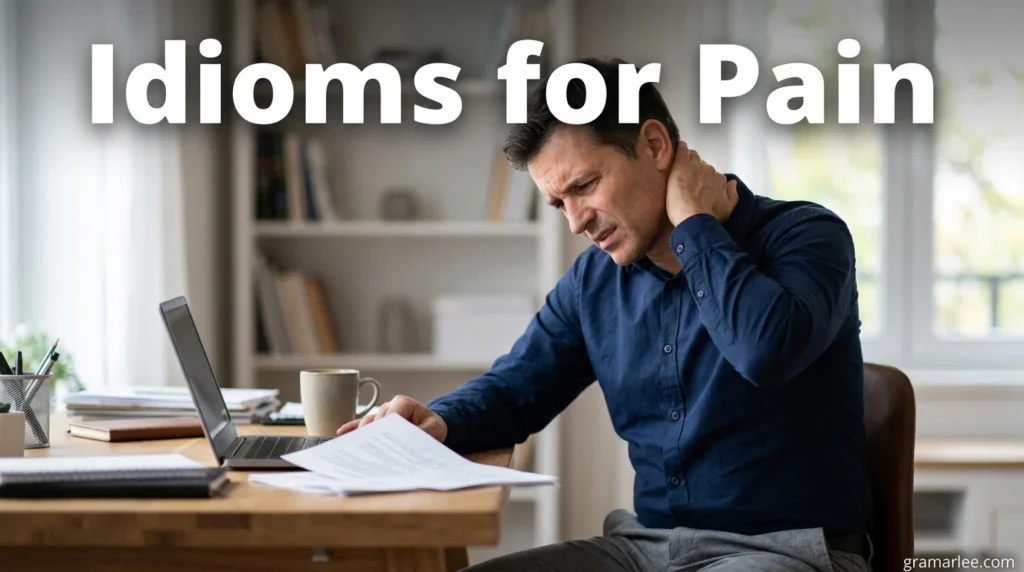
Pain is a universal human experience, yet expressing it effectively can be challenging, especially in a second language. Learning idioms for pain helps English learners communicate emotions, discomfort, heartbreak, stress, and suffering more naturally. These expressions appear frequently in conversations, books, movies, workplaces, and everyday communication.
Understanding pain-related idioms not only improves vocabulary but also helps speakers sound more fluent and culturally aware. Whether you are a student preparing for exams, a professional improving communication skills, or an English enthusiast, mastering these idioms will make your language richer and more expressive.
In this comprehensive guide, you’ll discover common idioms for pain, their meanings, examples, origins, usage tips, exercises, and practical applications in real-life situations.
Understanding Idioms for Pain
Idioms for pain are figurative expressions used to describe physical suffering, emotional distress, disappointment, frustration, grief, or hardship.
Unlike literal language, idioms use imaginative comparisons to convey deeper meanings.
Why Learn Pain Idioms?
- Improve conversational English
- Understand movies, books, and TV shows
- Express emotions more naturally
- Enhance writing and storytelling skills
- Build confidence in speaking English
Example
Instead of saying:
“I am emotionally hurt.”
A native speaker might say:
“My heart is broken.”
The second expression sounds more natural and impactful.
Physical Pain Idioms
Physical pain idioms describe bodily discomfort, injury, or illness.
A Pain in the Neck
Meaning: An annoying person or situation.
Example:
“The printer is a real pain in the neck today.”
Alternative Expressions:
- A nuisance
- A bother
- Irritating
Use Cases:
- Workplace frustrations
- Daily inconveniences
- Difficult tasks
Fun Fact:
The expression comes from the uncomfortable feeling of neck pain that constantly bothers people.
Hurt Like the Devil
Meaning: To cause severe pain.
Example:
“My ankle hurt like the devil after the fall.”
Feel Under the Weather
Meaning: Feeling sick or unwell.
Example:
“I’m feeling under the weather today.”
Emotional Pain Idioms
These idioms describe sadness, heartbreak, and emotional suffering.
Heartbroken
Meaning: Extremely sad because of loss or disappointment.
Example:
“She was heartbroken after hearing the news.”
Break Someone’s Heart
Meaning: Cause deep emotional pain.
Example:
“He broke her heart when he moved away.”
Cry Your Heart Out
Meaning: Cry intensely due to emotional pain.
Example:
“She cried her heart out after losing her pet.”
Alternative Expressions:
- Sob uncontrollably
- Weep bitterly
Idioms for Heartbreak and Loss
Loss often creates emotional pain that people express through idioms.
Wear Your Heart on Your Sleeve
Meaning: Show emotions openly.
Example:
“He wears his heart on his sleeve.”
Have a Heavy Heart
Meaning: Feel sadness or grief.
Example:
“She left with a heavy heart.”
Tear Someone Apart
Meaning: Cause intense emotional suffering.
Example:
“The tragedy tore the family apart.”
Idioms for Mental and Emotional Struggles
Mental stress can be painful, and English offers many idioms to describe it.
At the End of Your Rope
Meaning: Unable to cope anymore.
Example:
“I’m at the end of my rope with these problems.”
Carry the Weight of the World on Your Shoulders
Meaning: Feel burdened by responsibilities.
Example:
“He carries the weight of the world on his shoulders.”
Lose Sleep Over Something
Meaning: Worry excessively.
Example:
“Don’t lose sleep over minor mistakes.”
Idioms for Grief and Mourning
Grief-related idioms are common in emotional conversations.
In Deep Mourning
Meaning: Experiencing intense grief.
Example:
“The family is in deep mourning.”
A Broken Spirit
Meaning: Feeling emotionally defeated.
Example:
“Years of hardship left him with a broken spirit.”
Down in the Dumps
Meaning: Feeling sad and depressed.
Example:
“She’s been down in the dumps lately.”
Idioms for Emotional Recovery
Pain often leads to healing.
Pick Up the Pieces
Meaning: Recover after a difficult experience.
Example:
“After the divorce, she slowly picked up the pieces.”
Turn the Corner
Meaning: Begin improving.
Example:
“He’s finally turning the corner after months of illness.”
Get Back on Your Feet
Meaning: Recover physically, emotionally, or financially.
Example:
“It took time, but she got back on her feet.”
Pain Idioms Used in Everyday Conversations
Many pain idioms appear in casual speech.
Rub Salt in the Wound
Meaning: Make a bad situation worse.
Example:
“Laughing at his mistake rubbed salt in the wound.”
Add Insult to Injury
Meaning: Make an already painful situation worse.
Example:
“Missing the flight and losing luggage added insult to injury.”
Twist the Knife
Meaning: Increase emotional pain.
Example:
“His comments twisted the knife.”
Workplace Idioms for Stress and Pain
Professional environments often involve stress-related expressions.
Burn Out
Meaning: Become exhausted from overwork.
Example:
“Many employees burn out after long hours.”
Under Pressure
Meaning: Experiencing stress.
Example:
“We’re under pressure to meet deadlines.”
Hit a Wall
Meaning: Reach a point where progress becomes difficult.
Example:
“The project hit a wall.”
Relationship Idioms for Pain
Relationships often involve emotional highs and lows.
Give Someone the Cold Shoulder
Meaning: Ignore someone intentionally.
Example:
“She gave him the cold shoulder.”
Stab Someone in the Back
Meaning: Betray someone.
Example:
“His friend stabbed him in the back.”
Fall Apart
Meaning: Experience emotional breakdown.
Example:
“He fell apart after the breakup.”
Pain Idioms in Literature and Movies
Writers and filmmakers frequently use pain idioms because they create strong emotional imagery.
Examples
- Heartbroken
- Broken spirit
- Heavy heart
- End of your rope
- Cry your heart out
These idioms help audiences connect with characters emotionally.
Why Authors Use Them
- Create vivid imagery
- Show emotions quickly
- Make stories relatable
- Increase emotional impact
Common Mistakes When Using Pain Idioms
Learning idioms can be tricky.
Mistake 1: Taking Idioms Literally
Incorrect:
“My neck physically hurts because my boss is a pain in the neck.”
Correct:
“My boss is annoying.”
Mistake 2: Using Idioms in Formal Writing
Avoid excessive idioms in:
- Academic essays
- Legal documents
- Scientific reports
Mistake 3: Mixing Idioms
Incorrect:
“He rubbed the knife in the wound.”
Correct:
- Twist the knife
- Rub salt in the wound
Grouping Idioms for Pain by Context
Physical Pain
- Hurt like the devil
- Under the weather
- Pain in the neck
Emotional Pain
- Heartbroken
- Heavy heart
- Broken spirit
Stress and Anxiety
- Lose sleep over
- Under pressure
- At the end of your rope
Recovery
- Turn the corner
- Pick up the pieces
- Get back on your feet
Tips for Using Pain Idioms Effectively
Learn Through Context
Study idioms in stories, conversations, and movies.
Practice Speaking
Create sentences using new idioms.
Keep an Idiom Journal
Record:
- Meaning
- Example sentence
- Synonyms
- Context
Listen to Native Speakers
Podcasts and TV shows provide authentic examples.
Practice Exercise: Fill in the Blanks
Easy Level
- She was __________ after her favorite team lost.
- The injury __________ like the devil.
- He felt __________ the weather.
Answers
- heartbroken
- hurt
- under
Medium Level
Choose the correct idiom:
- The criticism only made things worse.
a) Get back on your feet
b) Rub salt in the wound
c) Turn the corner
Answer: b
- He recovered after a difficult year.
a) Picked up the pieces
b) Stabbed in the back
c) Fell apart
Answer: a
Advanced Level
Rewrite using an idiom.
- She felt extremely sad.
- He worried constantly.
- The extra criticism made things worse.
Answers
- She was heartbroken.
- He lost sleep over it.
- It rubbed salt in the wound.
Pain Idioms Quiz
Multiple Choice
1. What does “add insult to injury” mean?
A. Heal quickly
B. Improve a situation
C. Make a bad situation worse
Answer: C
True or False
2. “Pick up the pieces” means recovering after hardship.
Answer: True
Matching
Match the idiom with its meaning:
IdiomMeaningHeavy heartSadnessBurn outExhaustionCold shoulderIgnoring someone
Visual and Infographic Ideas
To make learning easier, create visuals showing:
Pain Idiom Mind Map
Center Topic:
Pain Idioms
Branches:
- Physical Pain
- Emotional Pain
- Stress
- Grief
- Recovery
Emotion Scale Infographic
Arrange idioms by intensity:
- Slightly upset
- Disappointed
- Heartbroken
- Devastated
Conversation Charts
Show real-life dialogues using pain idioms naturally.
FAQs
What are idioms for pain?
Idioms for pain are figurative expressions used to describe physical discomfort, emotional suffering, stress, grief, or hardship.
Why are pain idioms important?
They help speakers express feelings more naturally and understand native English conversations.
Are pain idioms used in professional settings?
Some are suitable for workplaces, such as “under pressure” and “burn out,” while highly emotional idioms may be better suited for informal communication.
How can I remember pain idioms?
Practice regularly, use flashcards, read examples, and create your own sentences.
Can idioms for pain describe emotional and physical suffering?
Yes. Some idioms focus on physical pain, while others describe emotional distress, stress, grief, and recovery.
How many pain idioms should learners know?
Learning 20–30 common idioms provides a strong foundation for everyday English communication.
Conclusion
Learning idioms for pain is an excellent way to improve English fluency and express complex emotions with confidence. These expressions help speakers describe physical discomfort, heartbreak, stress, grief, and recovery in ways that sound natural and engaging. From phrases like “heartbroken” and “rub salt in the wound” to “pick up the pieces” and “get back on your feet,” each idiom adds depth and color to communication.
The key to mastering pain-related idioms is consistent practice. Read them in context, listen for them in conversations, use them in writing, and incorporate them into daily speech. Over time, these expressions will become a natural part of your English vocabulary.
Remember: language is not just about words—it is about conveying feelings, experiences, and human emotions. By mastering these idioms, you gain the ability to communicate pain, resilience, and recovery with greater clarity and impact.