
Friendship grows through small words, love travels through gentle lines, and care lives
inside every thoughtful message we send.
In a world where hearts connect through screens, one tiny spelling confusion can
quietly shake our confidence.
The debate between messege or message feels simple, yet it touches emotions because
words carry feelings.
When you text a friend, write to someone you love, or send care to family, you want your words to feel right. This guide exists to hold your hand, clear your doubts, and help you write with warmth, trust, and clarity.
Let us gently explore the truth behind messege or message in a way that feels human, friendly,
and comforting.
Correct spelling of message
- The correct form message shows care and attention in every line 😊.
- Using message builds trust in friendly and professional writing 🌸.
- English dictionaries clearly support message as the standard word 📘.
- Every text message uses this spelling across platforms 💬.
- Choosing the right spelling reflects confidence and clarity ✨.
- Message connects emotions through written words 💖.
- Correct spelling avoids confusion and misinterpretation 🌈.
- Message fits naturally in emails and chats 📧.
- Writers prefer message for clean communication 🖊️.
- Using message improves readability instantly 🌟.
- Message supports modern digital language trends 📱.
- Correct spelling strengthens personal bonds 🤝.
- Message aligns with grammar rules taught worldwide 🎓.
- Using message shows respect for the reader 🌷.
- Message feels complete, polished, and caring 💎.
Common misspelling messege explained
- Messege appears due to phonetic confusion 😕.
- Many learners type messege by habit 🧠.
- Autocorrect often flags messege as incorrect 🚫.
- Messege lacks dictionary approval 📚.
- This spelling can reduce writing credibility ⚠️.
- Messege often comes from fast typing ⌨️.
- Stress and hurry cause this common mistake 🌀.
- Messege looks awkward to native readers 👀.
- English spelling rules do not support messege 📖.
- Using messege may distract the reader 🧩.
- Spellcheck tools highlight messege quickly 🔍.
- Messege can change tone unintentionally 🎭.
- Professional writing rejects messege firmly 🏢.
- Learning the correct form boosts confidence 💪.
- Avoiding messege improves communication flow 🌊.
Message meaning in simple words
- Message means information sent from one person to another 💌.
- It carries thoughts, emotions, and intentions 🌹.
- A message can be written, spoken, or digital 📲.
- People use messages to stay connected 🌍.
- Messages build relationships over distance 🧵.
- A message can comfort someone deeply 🤍.
- Messages help express love and care 💕.
- Clear messages prevent misunderstandings 🧠.
- A message often reflects personality 🎨.
- Messages can be short or long ✍️.
- A message keeps conversations alive 🔥.
- Messages help share news and feelings 🗞️.
- A message can inspire hope 🌞.
- Messages support daily communication 🕊️.
- A message always carries meaning 💫.
Why message matters in daily texting
- Correct spelling shows respect in texts 📱.
- Message clarity improves emotional understanding ❤️.
- Friends appreciate well written messages 😊.
- Message accuracy avoids awkward moments 😌.
- Clear messages strengthen trust 🤗.
- Daily chats rely on correct spelling 🧩.
- Message consistency builds communication habits 🛠️.
- Texting feels smoother with correct words 🌬️.
- Message accuracy reflects attention to detail 🔎.
- Loved ones feel valued through careful words 💖.
- Message clarity supports emotional safety 🛡️.
- Correct spelling avoids embarrassment 🙈.
- Message precision enhances expression 🎯.
- Text conversations feel warmer 💞.
- Message spelling supports mutual understanding 🤝.
Message usage in professional writing
- Message spelling affects professional image 🏆.
- Employers notice correct communication 🧑💼.
- Business messages demand clarity 📊.
- Message accuracy builds authority 🧱.
- Emails rely on correct spelling 📩.
- Message professionalism increases trust 🤝.
- Clients prefer error free messages 💼.
- Message correctness shows responsibility 🧭.
- Professional tone depends on accuracy 🎼.
- Message clarity saves time ⏱️.
- Correct usage avoids misinterpretation ⚖️.
- Message spelling reflects education 🎓.
- Reports demand accurate language 📑.
- Message consistency improves workflow 🔄.
- Professional respect grows with correct spelling 🌟.
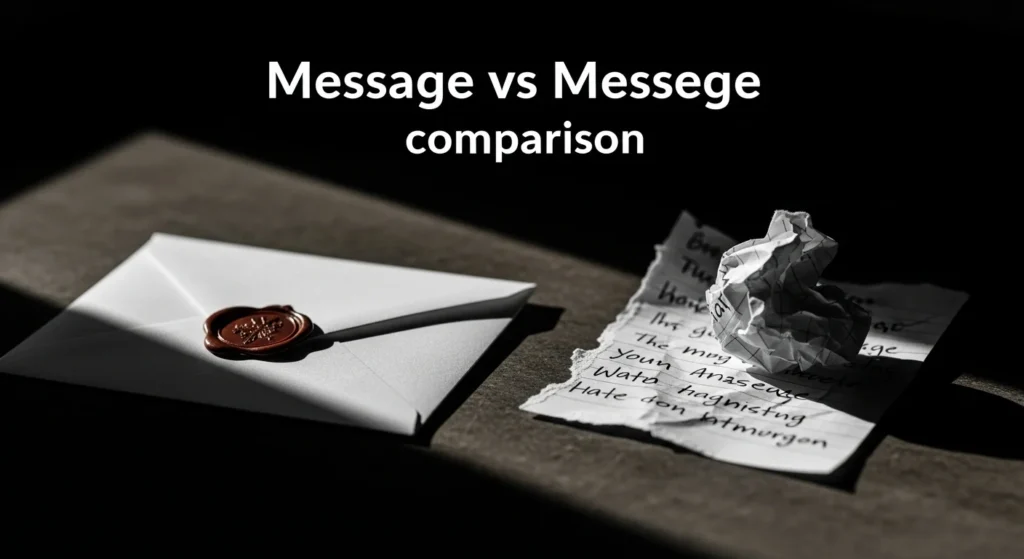
Message vs messege comparison
- Message stands as the accepted form 🏅.
- Messege fails grammar checks ❌.
- Message appears in dictionaries 📖.
- Messege appears in error lists 🚫.
- Message supports clear meaning 💡.
- Messege distracts the reader 😵.
- Message improves writing quality ✍️.
- Messege reduces credibility ⚠️.
- Message fits formal and casual use 🎭.
- Messege suits no standard context 🚷.
- Message strengthens communication 🧠.
- Messege creates doubt 🤨.
- Message remains timeless ⏳.
- Messege fades with learning 📉.
- Message wins every comparison 🥇.
Message spelling rules you should know
- English uses message with double s 🧩.
- The ge ending follows sound rules 🔊.
- Message follows French origin patterns 🇫🇷.
- Spelling remains constant across contexts 🔁.
- Message never uses extra e 🛑.
- Double s supports pronunciation 🎧.
- Message aligns with noun structure 🧱.
- Spelling rules support message 📐.
- Learning rules prevents mistakes 🧠.
- Message stays unchanged in plural forms 🔤.
- Rule awareness builds confidence 💪.
- Message spelling never varies 🧷.
- Grammar guides reinforce message 📘.
- Spelling rules simplify writing 🧼.
- Message remains stable in English 🌍.
Message in digital communication
- Digital chats depend on fast messages ⚡.
- Correct spelling improves readability 👓.
- Message clarity matters on social media 📸.
- Digital tone relies on words 🎚️.
- Message accuracy prevents confusion 🤔.
- Emojis support but words lead 😄.
- Message spelling affects impressions 👤.
- Online communication values clarity 🌐.
- Message correctness builds online respect 👍.
- Digital messages travel fast 🚀.
- Accuracy keeps meaning intact 🧬.
- Message spelling supports branding 🏷️.
- Online professionalism matters 💻.
- Message clarity supports engagement 🔔.
- Digital trust grows with correct words 🔐.
Emotional value of a clear message
- Clear messages show care 💗.
- Correct words reflect love 🌹.
- Message clarity avoids hurt feelings 🩹.
- Emotional safety grows with clarity 🫶.
- Message accuracy shows effort 🧡.
- Loved ones feel heard 👂.
- Clear messages reduce anxiety 🌿.
- Emotional bonds strengthen 💞.
- Message clarity supports honesty 🔑.
- Feelings travel safely 💌.
- Correct words show presence 🕯️.
- Message clarity comforts hearts 🤍.
- Emotional trust grows 🌈.
- Clear messages express warmth ☀️.
- Love flows through clarity 💖.
Message mistakes to avoid
- Avoid using messege 🚫.
- Avoid ignoring spellcheck ⚙️.
- Avoid rushing messages 🏃.
- Avoid careless typing ⌨️.
- Avoid unclear words 🌫️.
- Avoid confusing abbreviations 🧩.
- Avoid mixing spellings 🔀.
- Avoid skipping proofreading 👀.
- Avoid relying on guesswork 🎲.
- Avoid emotional miscommunication 💔.
- Avoid professional errors 🏢.
- Avoid repeated mistakes 🔁.
- Avoid informal spelling in formal text 🧾.
- Avoid overconfidence 😌.
- Avoid neglecting clarity 🧠.
Message improvement tips
- Proofread every message 📝.
- Slow down while typing 🐢.
- Use spellcheck tools 🛠️.
- Read messages aloud 🔊.
- Practice correct spelling ✍️.
- Learn from mistakes 📘.
- Stay consistent 🔗.
- Focus on clarity 🎯.
- Use simple words 🌼.
- Keep tone warm 🤗.
- Respect the reader 🌷.
- Improve daily habits 📆.
- Learn grammar basics 🎓.
- Edit before sending ✉️.
- Value your words 💎.
Message confidence for learners
- Confidence grows with practice 🌱.
- Correct spelling builds courage 🦋.
- Learning message spelling helps growth 📈.
- Small wins matter 🏅.
- Language learning takes time ⏳.
- Mistakes guide improvement 🧭.
- Confidence reflects effort 💪.
- Message mastery feels rewarding 🎉.
- Learners improve daily 📅.
- Support yourself kindly 🤍.
- Progress beats perfection 🌟.
- Confidence shows in writing 🖋️.
- Learning builds pride 😊.
- Keep practicing patiently 🌿.
- Confidence transforms communication ✨.
Message relevance in modern English
- Message remains widely used 🌍.
- Modern English favors clarity 🧠.
- Message supports global communication 🌐.
- Language evolves but spelling stays 📖.
- Message fits digital culture 📲.
- Social platforms use message consistently 💬.
- Message appears in apps 📱.
- Modern writing values accuracy 🎯.
- Message spelling stays stable ⛓️.
- Communication trends support message 🚀.
- Message connects generations 👨👩👧.
- Global users recognize message 🌎.
- Message supports inclusivity 🤝.
- Modern English trusts message 🏗️.
- Message remains essential 🔑.
Message clarity for SEO writing
- Correct spelling boosts SEO 📈.
- Search engines prefer accuracy 🤖.
- Message keyword clarity matters 🔍.
- Content trust improves ranking 🏆.
- Message consistency supports NLP 🧠.
- Clear spelling aids indexing 📚.
- Message relevance improves visibility 👁️.
- SEO values user experience 🌟.
- Correct words reduce bounce rate 🔄.
- Message clarity supports engagement 🧲.
- Search intent favors accuracy 🎯.
- Message spelling improves authority 🧱.
- SEO writing needs precision ✍️.
- Message relevance drives traffic 🚗.
- Accuracy builds long term value 🏡.
Message or messege final truth
- Message stands correct always ✅.
- Messege remains incorrect ❌.
- Message supports clarity 💡.
- Messege causes confusion 🌪️.
- Message reflects care 💖.
- Messege weakens writing ⚠️.
- Message builds trust 🤝.
- Messege breaks flow 🧱.
- Message feels complete 🌟.
- Messege feels unfinished 🧩.
- Message connects hearts 💞.
- Messege distracts minds 😵.
- Message shows confidence 💪.
- Messege signals uncertainty 🤔.
- Message wins without doubt 🏆.
As we reach the end, remember that words carry hearts. Choosing message over messege may seem small, yet it shapes how others feel when they read your words.
When you write with care, clarity, and warmth, your messages become bridges
of understanding.
Let every message you send reflect love, friendship, and respect, because the right
word can quietly make someone feel seen and valued.
FAQs
What is the correct spelling between messege or message?
The correct spelling is message, and dictionaries confirm it as the standard form.
Why do people often write messege instead of message?
People write messege due to pronunciation confusion and fast typing habits.
Is messege ever accepted in English?
Messege is not accepted in standard English writing or dictionaries.
Does correct spelling of message matter in texting?
Yes, correct spelling improves clarity, trust, and emotional connection.
How can I remember the correct spelling of message?
Remember that message uses double s and ends with ge, and practice it daily.