
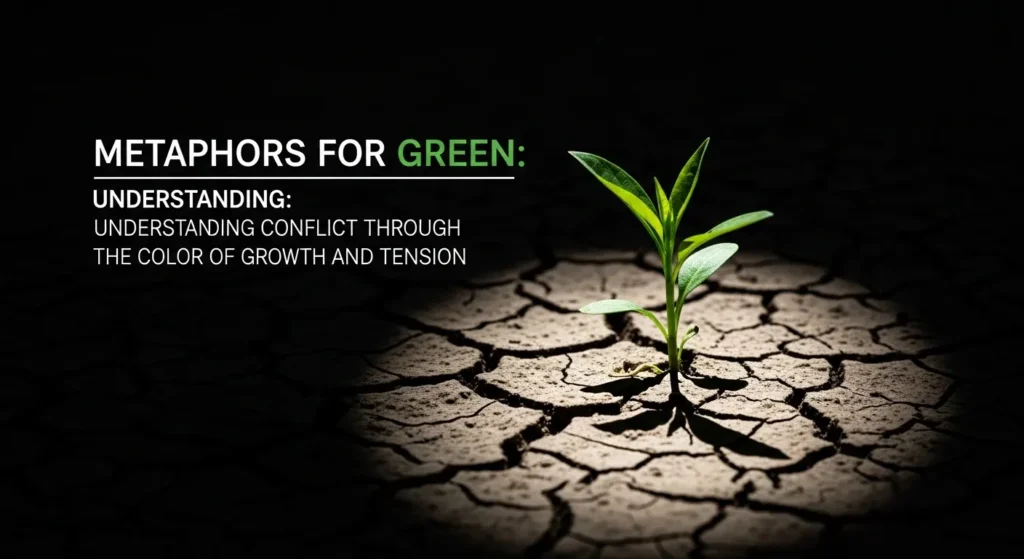
Conflict is a state of tension that arises when needs, values, desires, or expectations
clash.
It can unfold within a person, between individuals, or across communities and organizations. Yet
conflict is often abstract—felt as stress, confusion, jealousy, ambition, or moral struggle. This is where metaphors become powerful. By turning invisible emotions into visible imagery,
metaphors help us see what we feel.
The color green carries layered meanings: growth, renewal, envy, inexperience, money,
permission, nature, and even decay. Because of this range, “green” metaphors are especially
effective in describing emotional, personal, professional, and social conflicts.
Below is a carefully structured list of 22 metaphors for green, each explained with
meaning, example,
variations, and psychological insight.
1. Green with Envy
Meaning: Overcome by jealousy. Example: She turned green with envy when her colleague received the promotion. Alternatives: Consumed by jealousy, eaten up with envy. Insight: Jealousy often feels like a physical reaction—tightness, heat, unease. This metaphor externalizes envy as a
visible color, making internal resentment easier to recognize and address.
2. The Grass Is Always Greener
Meaning: Others’ situations seem better than one’s own. Example: He quit his job thinking the grass was greener elsewhere. Alternatives: Chasing illusions, idealizing the other side. Insight: This metaphor highlights comparison-driven dissatisfaction, a common source of personal
and professional conflict.
3. A Green-Eyed Monster
Meaning: Destructive jealousy. Example: The green-eyed monster crept in when she saw them laughing together. Alternatives: Jealous rage, possessive insecurity. Insight: By personifying
jealousy as a monster, the metaphor shows how envy can distort perception and
escalate conflict.
4. Green Around the Gills
Meaning: Feeling sick or uneasy. Example: He looked green around the gills before presenting his proposal. Alternatives: Pale with nerves, visibly unsettled. Insight: Anxiety in conflict situations often manifests physically. This metaphor connects emotional stress with bodily signals.
5. A Green Light
Meaning: Permission to proceed. Example: Management gave the green light to the controversial project. Alternatives: Approval granted, cleared for action. Insight: Conflict frequently arises when approval is uncertain. A “green light” represents resolution and forward movement.
6. Green Shoots
Meaning: Early signs of growth or recovery. Example: After months of tension, green shoots of cooperation began to appear. Alternatives: Signs of renewal, early recovery. Insight: This
metaphor reframes conflict as a stage in growth rather than permanent damage.
7. Greenhorn
Meaning: An inexperienced person. Example: As a greenhorn, she struggled with workplace politics. Alternatives: Rookie, newcomer. Insight: Inexperience can create misunderstandings and professional conflict; this metaphor emphasizes learning curves.
8. Green with Inexperience
Meaning: Lacking maturity or knowledge. Example: He was still green with inexperience in leadership roles. Alternatives: Wet behind the ears, unseasoned. Insight: This metaphor softens criticism by framing mistakes as part of natural development.
9. Green Pastures
Meaning: Better opportunities elsewhere. Example: She left for greener pastures after years of stagnation. Alternatives: Better prospects, brighter horizons. Insight: It captures ambition-driven conflict between comfort and aspiration.
10. A Green Storm
Meaning: Sudden surge of jealousy or unrest. Example: A green storm of resentment swept through the team. Alternatives: Wave of envy, surge of bitterness. Insight: Conflict often escalates rapidly; storm imagery conveys emotional intensity.
11. Green Flame
Meaning: Burning jealousy or ambition. Example: A green flame of rivalry burned between them. Alternatives: Smoldering envy, fiery ambition. Insight: Shows how competition can energize or consume relationships.
12. A Green Wall
Meaning: Emotional barrier caused by envy or insecurity. Example: A green wall grew between the siblings after the inheritance dispute. Alternatives: Emotional barrier, silent divide. Insight: Conflict often creates distance; this metaphor visualizes separation.
13. Green Tide
Meaning: Rising collective frustration or desire. Example: A green tide of environmental activism flooded the streets. Alternatives: Growing movement, swelling demand. Insight: Useful for social conflict, showing momentum and inevitability.
14. Green Fog
Meaning: Confusion fueled by jealousy or naivety. Example: A green fog clouded his judgment during the argument. Alternatives: Clouded thinking, emotional haze. Insight: Demonstrates how emotion distorts rational thought.
15. A Green Seed
Meaning: Early stage of an idea or conflict. Example: The green seed of doubt was planted in her mind. Alternatives: Seed of suspicion, budding concern. Insight: Small misunderstandings can grow into larger disputes if ignored.
16. Green Currency
Meaning: Money as a source of tension. Example: Green currency divided the once-close partners. Alternatives: Financial strain, monetary conflict. Insight: Links economic pressure to relational strain.
17. Green Pulse
Meaning: Renewed energy or hope. Example: A green pulse of optimism ran through the organization. Alternatives: Fresh momentum, renewed drive. Insight: Conflict resolution often sparks revitalization.
18. Green Firefly
Meaning: Brief spark of hope during conflict. Example: In the heated debate, a green firefly of compromise flickered. Alternatives: Glimmer of hope, small breakthrough. Insight: Encourages noticing small positive shifts.
19. Green Roots
Meaning: Deep-seated growth beneath visible tension. Example: Though arguments continued, green roots of trust were forming. Alternatives: Underlying stability, deep foundation. Insight: Reminds us that conflict can strengthen foundations.
20. Green Armor
Meaning: Defensive jealousy or pride. Example: He wore green armor to hide his insecurity. Alternatives: Emotional shield, protective pride. Insight: Many conflicts stem from vulnerability masked as hostility.
21. A Green Horizon
Meaning: Promising future beyond current conflict. Example: They negotiated patiently, focusing on the green horizon ahead. Alternatives: Bright future, hopeful outlook. Insight: Shifts focus from present tension to long-term possibility.
22. Green Bridge
Meaning: Path toward reconciliation and growth. Example: Honest conversation became the green bridge between them. Alternatives: Path to peace, bridge of understanding. Insight: Emphasizes communication as a constructive resolution tool.
How to Use Green Metaphors Effectively
1. In Writing
- Use green metaphors to add emotional clarity to abstract themes like jealousy, ambition,
- renewal, or financial tension.
- Avoid overuse; choose one strong metaphor per key idea.
- Match tone: “green storm” suits dramatic scenes, while “green shoots” fits reflective analysis.
2. In Speeches
- Visual metaphors create memorable imagery.
- Use growth-related green metaphors (green bridge, green horizon) when inspiring reconciliation or progress.
- For professional settings, metaphors like “green light” or “green shoots” feel natural and
- accessible.
3. In Everyday Communication
- Metaphors can soften difficult conversations. Saying “I felt a green seed of doubt” is gentler than direct accusation.
- They encourage empathy by describing feelings indirectly.
Famous Uses of Conflict Metaphors in Literature and History
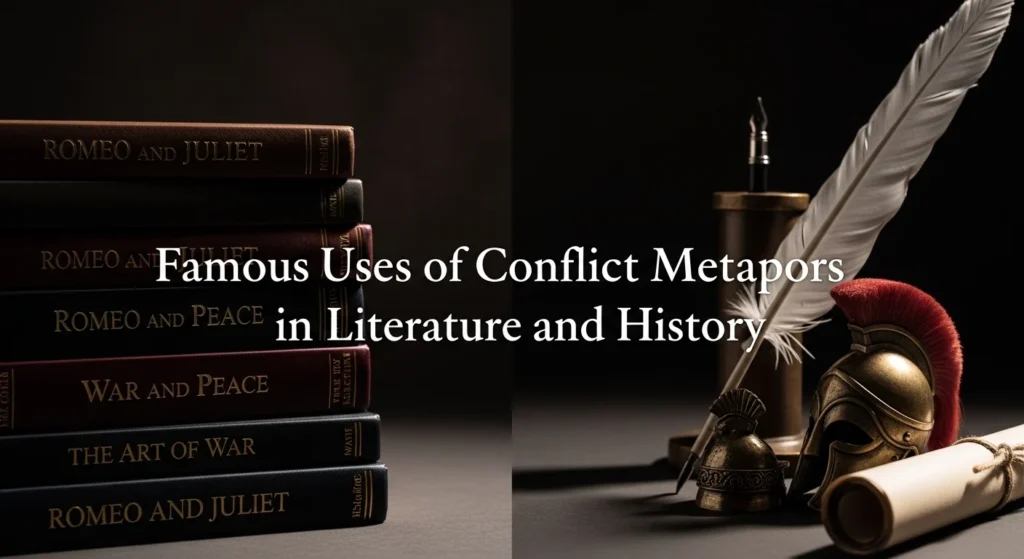
Throughout literature, color metaphors have vividly portrayed conflict. For example, in Othello
by William Shakespeare, jealousy is described as the “green-eyed monster,” illustrating
how envy distorts reason.
In political and social movements, environmental activism has often been framed as a
“green movement,” symbolizing renewal and resistance to destructive systems. Leaders like Mahatma
Gandhi frequently used nature-based metaphors to describe moral struggle and growth,
reinforcing the link between conflict and renewal.
These examples show how green metaphors connect emotional struggle with vivid imagery
that endures across centuries.
FAQ: Metaphors for Green
1. Why is green associated with jealousy?
Historically, green was linked to sickness and imbalance, which evolved into symbolism for
envy.
2. Can green metaphors be positive?
Yes. Green often symbolizes growth, renewal, and hope.
3. Are green metaphors suitable for professional writing?
Yes—especially phrases like “green
light” or “green shoots,” which are widely accepted in business contexts.
4. How do metaphors reduce conflict?
They help people express emotions safely and clearly, promoting empathy.
5. Should I invent my own green metaphors?
Absolutely. Original metaphors can make your communication more engaging and authentic.
Conclusion
Metaphors shape how we perceive and respond to conflict.
The color green, rich with meanings of envy, renewal, ambition, and hope, provides a
versatile lens for understanding emotional, personal, professional, and social tensions.
By translating invisible feelings into vivid imagery—a green storm, a green bridge,
a green horizon—we make conflict more understandable and more manageable.