
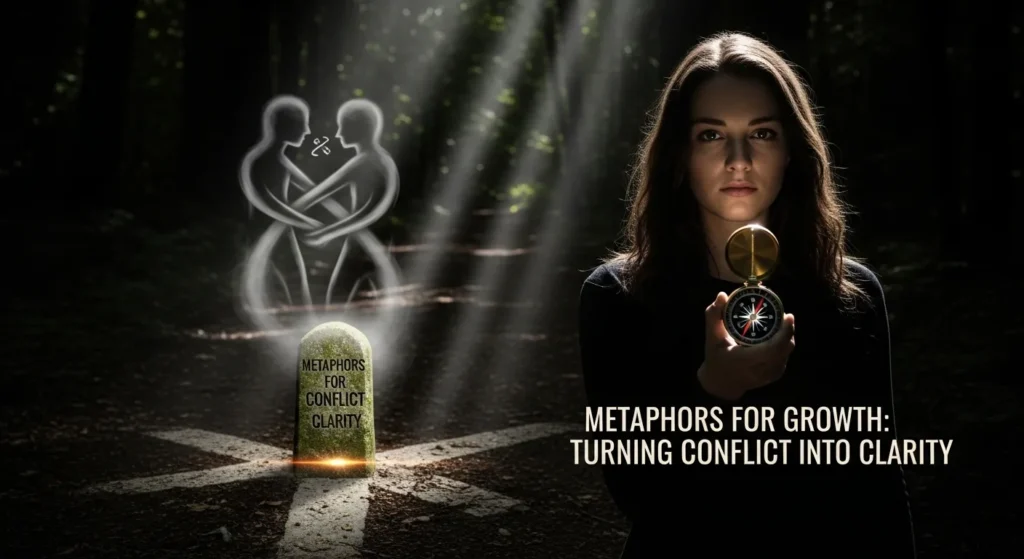
Conflict is a natural part of life. It can arise within our emotions, between individuals, inside
workplaces, or across entire communities. At its core, conflict is a tension between opposing
forces—needs, values, goals, or perspectives that seem to collide. While conflict can feel
overwhelming or abstract, metaphors transform it into something visible and relatable.
By comparing emotional or social tension to storms, bridges, seeds, or battles, metaphors
give shape to invisible struggles and make growth easier to understand.
Metaphors for growth do more than decorate language—they help us process change,
resilience, healing, and transformation. Below is a carefully structured list of 22 powerful
metaphors that illuminate personal, professional, emotional, and social growth through
vivid imagery.
1. Growth Is a Seed Breaking Through Soil
Meaning: Progress often begins quietly and requires effort beneath the surface before
becoming visible. Example: “Her confidence was like a seed breaking through soil after years
of self-doubt.” Alternatives: Sprouting potential, planting new beginnings, roots taking hold. Insight: This metaphor emphasizes patience and unseen effort, reminding us that
transformation often starts internally.
2. Growth Is Climbing a Mountain
Meaning: Personal development requires persistence and endurance through challenges. Example: “Building the company felt like climbing a mountain—every step demanded strength.” Alternatives: Scaling new heights, uphill journey, reaching the summit. Insight: The
mountain image highlights both struggle and reward, reinforcing that effort leads to perspective.
3. Growth Is a River Carving Stone
Meaning: Steady effort over time reshapes even the hardest obstacles. Example: “His consistent practice was like a river carving stone.” Alternatives: Wearing down resistance, steady flow, shaping through persistence. Insight: This metaphor illustrates how patience and consistency can overcome rigid resistance.
4. Growth Is Emerging from a Storm
Meaning: Hardship often precedes clarity and renewal. Example: “After the conflict, the team emerged from the storm stronger.” Alternatives: Weathering the storm, calm after chaos, surviving turbulence. Insight: Storm imagery validates emotional intensity while suggesting that conflict is temporary.
5. Growth Is Forged in Fire
Meaning: Pressure and difficulty refine character. Example: “Leadership is forged in fire during moments of crisis.” Alternatives: Tempered by heat, tested under pressure, shaped by adversity. Insight: Fire symbolizes transformation, suggesting that discomfort can strengthen resilience.
6. Growth Is Building a Bridge
Meaning: Progress involves connecting differences. Example: “They built a bridge between cultures through open dialogue.” Alternatives: Closing the gap, finding common ground, linking perspectives. Insight: Bridges represent reconciliation and collaboration, crucial in resolving social conflicts.
7. Growth Is Turning the Page
Meaning: Moving forward from past struggles. Example: “She decided it was time to turn the page.” Alternatives: Starting a new chapter, fresh start, rewriting the story. Insight: This metaphor empowers individuals to reframe their narrative after conflict.
8. Growth Is a Phoenix Rising
Meaning: Renewal after failure or loss. Example: “The company rose like a phoenix after bankruptcy.” Alternatives: Rising from ashes, rebirth, second life. Insight: The phoenix symbolizes hope and dramatic transformation.
9. Growth Is Tending a Garden
Meaning: Development requires care and patience. Example: “He tended his relationships like a careful gardener.” Alternatives: Nurturing roots, cultivating trust, pruning negativity. Insight: Gardening imagery reinforces responsibility and steady attention.
10. Growth Is Breaking Chains
Meaning: Overcoming limiting beliefs or restrictions. Example: “Therapy helped her break the chains of fear.” Alternatives: Breaking free, unshackling potential, releasing constraints. Insight: This metaphor emphasizes liberation from internal or external barriers.
11. Growth Is Lighting a Candle
Meaning: Even small change can dispel darkness. Example: “One honest conversation lit a candle in their strained friendship.” Alternatives: Spark of hope, igniting possibility, shining light. Insight: Light imagery conveys hope and gradual emotional clarity.
12. Growth Is Crossing a Bridge
Meaning: Transitioning from one stage to another. Example: “Graduation felt like crossing a bridge into adulthood.” Alternatives: Stepping into the next phase, entering new territory. Insight: Crossing suggests courage and irreversible movement forward.
13. Growth Is Unfolding Wings
Meaning: Discovering potential and independence. Example: “Travel allowed her to unfold her wings.” Alternatives: Spreading wings, taking flight, soaring higher. Insight: Wing imagery captures confidence and autonomy.
14. Growth Is Sharpening a Blade
Meaning: Improvement through practice and refinement. Example: “Each setback sharpened his skills.” Alternatives: Honing abilities, refining talent, polishing strengths. Insight: Suggests that friction and repetition enhance capability.
15. Growth Is a Tree Deepening Its Roots
Meaning: Stability comes from inner strength. Example: “The crisis deepened the organization’s roots.” Alternatives: Standing firm, grounded foundation, rooted resilience. Insight: Roots symbolize security and resilience during external conflict.
16. Growth Is Rewriting the Script
Meaning: Changing old patterns or behaviors. Example: “He rewrote the script of his family’s expectations.” Alternatives: Changing the storyline, revising the narrative. Insight: This metaphor encourages agency and personal authorship.
17. Growth Is Repairing a Cracked Mirror
Meaning: Healing self-image after emotional conflict. Example: “Support helped her repair the cracked mirror of her self-esteem.” Alternatives: Mending identity, restoring reflection. Insight: Highlights the fragility of self-perception and the process of restoration.
18. Growth Is Sailing Against the Wind
Meaning: Progress despite resistance. Example: “Advocating for change felt like sailing against the wind.” Alternatives: Pushing upstream, resisting the current. Insight: Suggests determination and adaptive strength.
19. Growth Is Climbing Out of a Valley
Meaning: Recovery from low points. Example: “He slowly climbed out of the valley of burnout.” Alternatives: Rising from lows, emerging from the depths. Insight: Valleys symbolize emotional downturns; climbing reflects effortful recovery.
20. Growth Is Piecing Together a Puzzle
Meaning: Understanding develops gradually. Example: “Forgiveness was like piecing together a puzzle.” Alternatives: Finding missing pieces, assembling clarity. Insight: Emphasizes patience and perspective in resolving misunderstandings.
21. Growth Is Opening a Door
Meaning: Accepting opportunity or change. Example: “Apologizing opened the door to reconciliation.” Alternatives: Unlocking possibilities, stepping through opportunity. Insight: Doors represent choice and intentional movement.
22. Growth Is Healing a Fracture
Meaning: Repair strengthens over time. Example: “Their friendship healed like a fracture—slowly but stronger.” Alternatives: Mending bonds, restoring strength. Insight: Healing metaphors normalize time and tenderness in conflict resolution.
How to Use Growth Metaphors Effectively
1. In Writing
- Use metaphors to clarify complex emotional experiences.
- Avoid mixing too many metaphors at once.
- Choose imagery consistent with tone (e.g., garden metaphors for nurturing themes).
2. In Speeches
- Select metaphors that resonate with your audience’s shared experiences.
- Repeat a central metaphor to create cohesion.
- Use vivid but simple language to enhance memorability.
3. In Everyday Communication
- Replace abstract phrases like “It’s complicated” with imagery such as “We’re navigating
- rough waters.”
- Use metaphors to soften conflict (“Let’s build a bridge here”).
- Encourage empathy by framing struggles as shared journeys.
Famous Uses of Conflict Metaphors
Writers and leaders have long relied on metaphor to frame struggle and growth:
- In Romeo and Juliet, William Shakespeare portrays love as both light and battle,
- intensifying
emotional conflict. - Martin Luther King Jr. described injustice as a “darkness” that light must drive out,
- transforming civil rights conflict into moral imagery.
- In The Old Man and the Sea, Ernest Hemingway presents struggle as a battle against the sea,
- symbolizing endurance and dignity.
These examples show how metaphor shapes how audiences perceive adversity.
Frequently Asked Questions
1. Why are metaphors important for understanding growth?
Metaphors translate abstract experiences into concrete images, making emotional and
psychological processes easier to grasp.
2. Can metaphors influence how people handle conflict?
Yes. When conflict is framed as a journey or storm rather than a war, it often encourages
patience and collaboration.
3. Should metaphors always be positive?
Not necessarily. Even difficult imagery (fire, storms, fractures) can communicate strength and
transformation when used thoughtfully.
4. How do I choose the right metaphor?
Consider your audience, the emotional tone, and the message you want to emphasize—
resilience, healing, persistence, or renewal.
5. Can overusing metaphors weaken writing?
Yes. Overloading language with mixed or excessive imagery can confuse readers. Consistency and clarity matter.
Conclusion
Metaphors are more than stylistic flourishes—they are cognitive tools. By turning conflict into
storms, bridges, seeds, or mountains, metaphors reshape how we interpret struggle. They
cultivate empathy by making invisible tension visible and offer pathways toward resolution by
reframing adversity as transformation. Whether used in essays, speeches, therapy sessions,
classrooms, or daily conversations, metaphors for growth help individuals and communities
see conflict not merely as division—but as a catalyst for deeper understanding and
lasting change.