
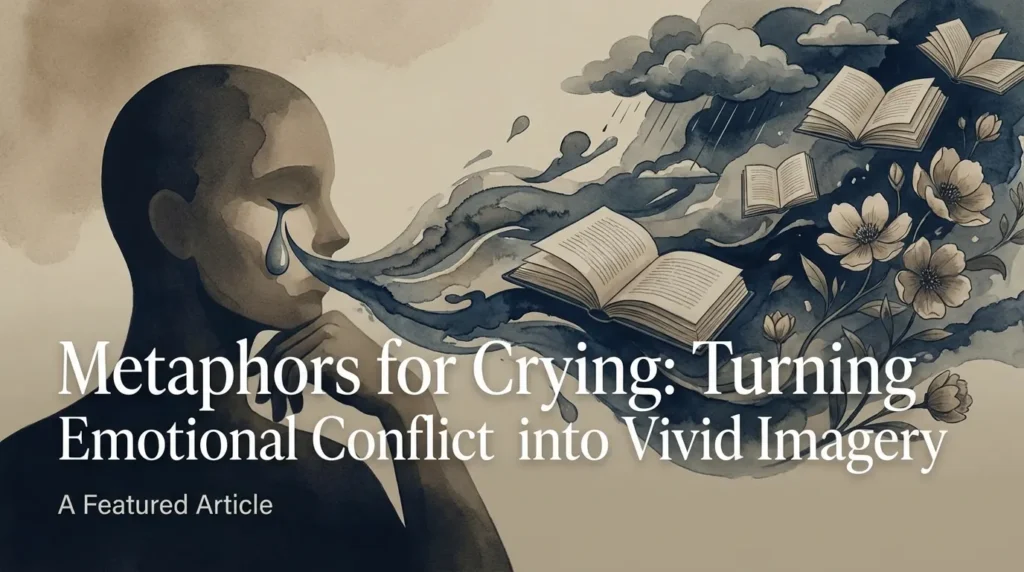
Conflict is the tension that arises when emotions, desires, values, or expectations collide—
within ourselves or with others.
It may appear in personal heartbreak, professional disappointment, or social misunderstanding. Crying is often the most visible expression of that inner struggle. Yet tears alone do not fully explain the depth of what someone feels.
That is where metaphors become powerful. A metaphor transforms abstract emotional tension into concrete, relatable imagery. Instead of saying “She was very sad,” we might say, “She broke like a dam.” The image immediately conveys pressure, buildup, and sudden release.
Metaphors allow readers and listeners to see and feel conflict rather than merely
understand it intellectually.
Below is a carefully structured list of 22 metaphors for crying. Each includes a meaning, a
natural example sentence, alternative expressions, and a brief emotional insight.
1. A Dam Breaking
Meaning: Emotions were held back for a long time before suddenly overflowing. Example: After months of pretending to be strong, she cried like a dam breaking. Alternatives: Floodgates opening, bursting at the seams. Insight: This metaphor highlights emotional
suppression and the psychological cost of holding in conflict.
2. A Summer Storm
Meaning: Intense but temporary crying. Example: His tears came like a summer storm—loud and fierce, but soon gone. Alternatives: Sudden downpour, emotional cloudburst. Insight: It suggests that some conflicts release quickly and clear emotional air.
3. Silent Rain
Meaning: Quiet, steady tears without outward drama. Example: She sat by the window, tears falling like silent rain. Alternatives: Soft drizzle, muted shower. Insight: Reflects private grief and internalized conflict.
4. A Cracked Mirror
Meaning: Crying from feeling emotionally shattered. Example: After the betrayal, he felt like a
mirror, reflecting pain in every direction. Alternatives: Shattered glass, broken reflection. Insight: Emphasizes fractured identity or self-worth during conflict.
5. A Melting Candle
Meaning: Gradual emotional breakdown. Example: She cried like a candle melting slowly in the dark. Alternatives: Burning down, fading flame. Insight: Suggests emotional exhaustion over time.
6. A Leaking Roof
Meaning: Ongoing sadness that cannot be fully contained. Example: His tears were like a leaking roof—small drops that wouldn’t stop. Alternatives: Dripping faucet, steady seepage. Insight: Points to unresolved, persistent conflict.
7. A Broken Violin
Meaning: Crying that sounds strained or sorrowful. Example: Her sobs rose like a broken violin playing a lonely tune. Alternatives: Off-key melody, cracked note. Insight: Connects emotional pain with distorted harmony.
8. A Flooded River
Meaning: Overwhelming emotional release. Example: Grief flooded her like a river after heavy rain. Alternatives: Overflowing stream, rising tide. Insight: Highlights lack of control in intense conflict.
9. A Wilting Flower
Meaning: Tears caused by emotional depletion. Example: He looked like a wilting flower as he quietly cried. Alternatives: Drooping petals, fading bloom. Insight: Symbolizes vulnerability and fragility.
10. A Heavy Monsoon
Meaning: Prolonged, powerful crying. Example: She wept like a heavy monsoon that refused to end. Alternatives: Endless rainfall, torrential storm. Insight: Conveys sustained emotional turmoil.
11. A Fractured Dam Wall
Meaning: Emotional restraint weakening under pressure. Example: His composure cracked like a fractured dam wall. Alternatives: Splitting barrier, crumbling wall. Insight: Shows the strain of internal conflict.
12. Falling Autumn Leaves
Meaning: Gentle, continuous tears. Example: Tears fell like autumn leaves drifting to the ground. Alternatives: Quiet shedding, soft descent. Insight: Suggests acceptance mixed with sadness.
13. A Shaken Snow Globe
Meaning: Emotions stirred suddenly. Example: Her world felt like a shaken snow globe as she cried. Alternatives: Stirred storm, swirling chaos. Insight: Reflects confusion and emotional disorientation.
14. A Collapsing Bridge
Meaning: Crying caused by broken trust or connection. Example: His tears came as their friendship collapsed like a bridge. Alternatives: Broken pathway, shattered link. Insight: Emphasizes relational conflict.
15. A Dying Fire
Meaning: Tears of fading hope. Example: She cried like a dying fire losing its last spark. Alternatives: Fading ember, dimming flame. Insight: Represents emotional defeat or resignation.
16. A Torn Letter
Meaning: Emotional pain from harsh words or miscommunication. Example: He felt like a torn letter, unread and discarded, as he wept. Alternatives: Ripped page, crumpled note. Insight: Connects crying to communication breakdown.
17. A Shattered Window
Meaning: Sudden, sharp emotional pain. Example: The news hit her like a shattered window, and tears followed instantly. Alternatives: Broken pane, splintered glass. Insight: Shows how conflict can shock and wound.
18. A Tidal Wave
Meaning: Overpowering, unstoppable crying. Example: Grief struck him like a tidal wave. Alternatives: Emotional tsunami, crashing surge. Insight: Symbolizes overwhelming external events.
19. A Rusting Chain
Meaning: Slow emotional decay leading to tears. Example: Regret ate at him like a rusting chain until he cried. Alternatives: Corroding bond, weakening link. Insight: Suggests long-term internal conflict.
20. A Bruised Sky
Meaning: Emotional pain lingering before release. Example: Her eyes looked like a bruised sky before the rain of tears began. Alternatives: Darkened horizon, stormy heavens. Insight: Captures anticipation of emotional release.
21. A Crumbling Cliff
Meaning: Emotional stability giving way. Example: His strength fell apart like a crumbling cliff. Alternatives: Eroding edge, collapsing ledge. Insight: Illustrates the fragility beneath outward strength.
22. A Locked Door Finally Opening
Meaning: Releasing emotions after suppression. Example: Her tears flowed like a locked door finally opening. Alternatives: Unsealed gate, lifted barrier. Insight: Suggests healing through vulnerability.
How to Use These Metaphors Effectively
1. In Writing
- Choose metaphors that match the emotional intensity of your scene.
- Avoid mixing unrelated images (e.g., storm and fire together unless carefully crafted).
- Use sparingly for maximum impact.
2. In Speeches
- Select universally relatable imagery (rain, storms, bridges).
- Pause after delivering a metaphor to let it resonate.
3. In Everyday Communication
- Use gentle metaphors to express feelings without sounding dramatic.
- For example, saying “I feel like a cracked mirror today” can communicate vulnerability
without long explanations.
Famous Literary and Historical Uses of Conflict Metaphors
Writers and leaders have long used metaphors to express emotional and social conflict.
- In Romeo and Juliet by William Shakespeare, emotional conflict is often portrayed
through storm imagery and violent contrasts. - Charles Dickens frequently used weather metaphors in novels like Great Expectations to
reflect inner turmoil. - In speeches by Martin Luther King Jr., metaphors such as storms and mountains conveyed
social struggle and hope.
These examples show how metaphor shapes public understanding of emotional and societal conflict.
Frequently Asked Questions (FAQ)
1. Why use metaphors instead of simply saying “crying”?
Metaphors make emotions vivid and relatable. They help others visualize and empathize with the experience.
2. Are metaphors for crying always negative?
Not necessarily. Some suggest healing or release, like “a locked door opening.”
3. Can I create my own metaphor?
Yes. The best metaphors often come from personal observation and authentic feeling.
4. How many metaphors should I use in one piece of writing?
Use only as many as strengthen your message. Too many can overwhelm readers.
5. Do metaphors improve conflict resolution?
They can. When people describe emotions metaphorically, it often makes discussions less
accusatory and more expressive.
Conclusion
Metaphors for crying do more than decorate language—they deepen understanding.
They transform invisible emotional conflict into images we can see: storms, floods, broken
mirrors, fading fires. Through metaphor, pain becomes communicable, vulnerability becomes shareable, and conflict becomes comprehensible.
For students, writers, and speakers alike, learning to use metaphors thoughtfully can
strengthen empathy, clarify emotion, and even guide resolution. When we change the image,
we often change the understanding—and sometimes, that shift in perception is the
first step toward healing.