
Creativity is one of the most fascinating human abilities, yet also one of the hardest to define. We see it in music, art, writing, problem-solving, and even everyday thinking—but when we try to explain it directly, it often feels abstract and elusive. That’s why we rely on metaphors for creativity.
We say creativity is “a spark,” “a flowing river,” “a muscle,” or “a garden that grows with care.” These metaphors are not just decorative language—they shape how we understand imagination, innovation, and human potential.
In this article, we’ll explore the most powerful metaphors for creativity, their psychological meaning, cultural interpretations, and how they influence real-life thinking and productivity. You’ll also learn how to use these metaphors to unlock your own creative potential.
1. Creativity Is a Spark in the Dark
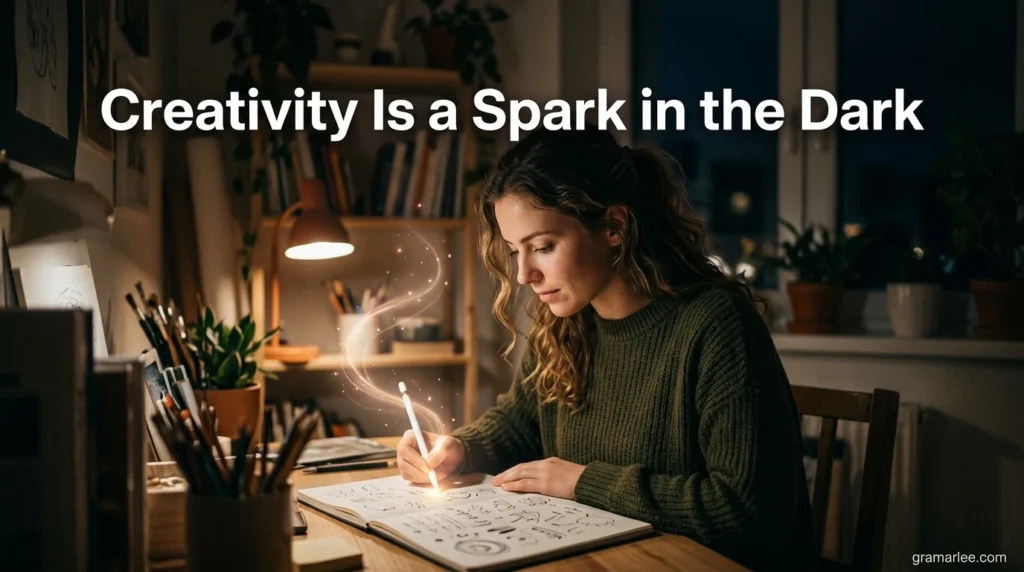
Meaning: A small but powerful beginning emerging from uncertainty. Example: Her idea was a spark in the dark that lit up the entire project. Alternatives: A flicker of light, a sudden flash, a glimmer of hope. Insight: This metaphor reflects how creative ideas often arise during
confusion or doubt, symbolizing hope and possibility.
2. Creativity Is a Garden
Meaning: Ideas grow gradually and require care. Example: He tends his creative garden every morning by journaling. Alternatives: A field of ideas, a blooming landscape. Insight: Suggests patience, nurturing, and the importance of environment in personal growth.
3. Creativity Is a Storm
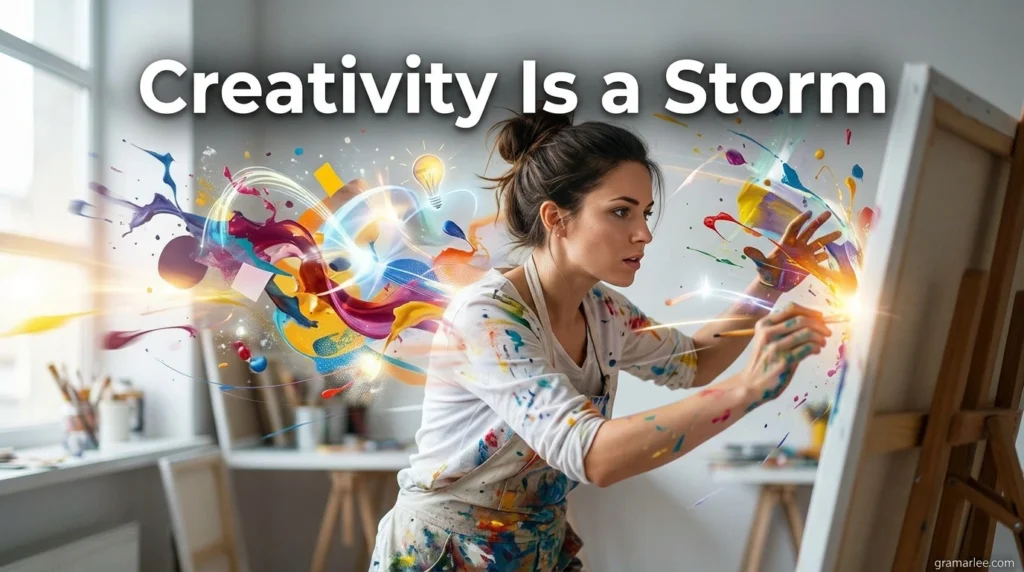
Meaning: A surge of intense, uncontrollable inspiration. Example: A storm of ideas hit her during the brainstorming session. Alternatives: A whirlwind, a flood of inspiration. Insight: Reflects emotional intensity and the overwhelming nature of creative breakthroughs.
4. Creativity Is a Bridge
Meaning: A connection between imagination and reality. Example: Design acts as a bridge between vision and function. Alternatives: A pathway, a link, a connector. Insight: Highlights
creativity’s role in solving social and professional conflicts by linking opposing sides.
5. Creativity Is a Puzzle
Meaning: A process of assembling scattered pieces into a whole. Example: Writing the novel felt like solving a complex puzzle. Alternatives: A mosaic, a jigsaw, a code to crack. Insight: Emphasizes problem-solving and cognitive engagement.
6. Creativity Is a Fire
Meaning: Passionate, energetic expression. Example: There’s a fire in her storytelling that captivates audiences. Alternatives: A flame, a blaze, a burning desire. Insight: Represents emotional drive and the psychological fuel behind innovation.
7. Creativity Is a River
Meaning: A continuous, flowing process. Example: His creativity flows like a river when he feels inspired. Alternatives: A stream, a current, a tide. Insight: Suggests adaptability and momentum in personal and professional growth.
8. Creativity Is a Seed
Meaning: A small beginning with great potential. Example: That simple sketch was the seed of a major campaign. Alternatives: A kernel, a starting point, a germ of an idea. Insight: Reinforces the importance of nurturing early ideas rather than dismissing them.
9. Creativity Is a Laboratory
Meaning: A space for experimentation and trial. Example: Her studio is a laboratory of bold experiments. Alternatives: A workshop, a testing ground. Insight: Encourages risk-taking and reframes failure as learning.
10. Creativity Is a Compass
Meaning: A guide toward new directions. Example: Creativity became his compass during career uncertainty. Alternatives: A guidepost, a north star. Insight: Shows how imagination can resolve personal conflict by offering direction.
11. Creativity Is a Battlefield
Meaning: A struggle between ideas, doubt, and ambition. Example: Her mind was a battlefield of competing concepts. Alternatives: An arena, a clash of ideas. Insight: Captures internal psychological conflict during decision-making.
12. Creativity Is a Lighthouse
Meaning: Illumination during confusion. Example: Innovation served as a lighthouse during the company’s crisis. Alternatives: A beacon, a guiding light. Insight: Emphasizes clarity and leadership in social conflict.
13. Creativity Is a Symphony
Meaning: Harmonizing different elements into unity. Example: The project became a symphony of design and technology. Alternatives: An orchestra, harmonious composition. Insight: Suggests collaboration and balance in professional settings.
14. Creativity Is a Mirror
Meaning: Reflection of inner thoughts and identity. Example: Her art is a mirror of her experiences. Alternatives: A reflection, a window to the soul. Insight: Links creativity to emotional authenticity.
15. Creativity Is a Journey
Meaning: An ongoing process with growth and obstacles. Example: His writing career has been a long creative journey. Alternatives: A path, an expedition. Insight: Encourages resilience during setbacks.
16. Creativity Is a Volcano
Meaning: Explosive release of ideas after buildup. Example: Months of silence ended in a volcanic burst of poetry. Alternatives: An eruption, an explosion of insight. Insight: Reflects emotional buildup and catharsis.
17. Creativity Is a Key
Meaning: Unlocking solutions and possibilities. Example: Innovation was the key to resolving the dispute. Alternatives: An unlocker, a gateway tool. Insight: Highlights problem-solving in conflict resolution.
18. Creativity Is a Tapestry
Meaning: Interwoven ideas forming a complex whole. Example: Her novel is a tapestry of cultures and memories. Alternatives: A weave, an intricate fabric. Insight: Emphasizes interconnected social narratives.
19. Creativity Is a Playground
Meaning: Freedom to explore and experiment. Example: The workshop became a playground for imagination. Alternatives: A sandbox, a creative space. Insight: Reduces fear and performance pressure.
20. Creativity Is a Furnace
Meaning: Intense heat that transforms raw material. Example: Pressure acted as a furnace for innovation. Alternatives: A forge, a crucible. Insight: Suggests growth through challenge.
21. Creativity Is a Map
Meaning: A guide to uncharted territory. Example: Her vision provided a map for the team’s future. Alternatives: A blueprint, a chart. Insight: Encourages strategic thinking in professional conflict.
22. Creativity Is a Conversation
Meaning: An exchange between ideas, people, or cultures. Example: Art is a conversation between the artist and society. Alternatives: A dialogue, a discussion. Insight: Frames creativity as relational and socially meaningful.
How to Use These Metaphors Effectively
Writing
- Choose metaphors that match the emotional tone of your message.
- Avoid mixing unrelated imagery (e.g., storm + garden in the same short passage).
- Develop one metaphor deeply rather than using many superficially.
Speeches
- Use vivid metaphors to simplify complex professional or social conflicts.
- Repeat a central metaphor for emphasis and unity.
- Pair metaphor with a brief real-world example.
Everyday Communication
- Use gentle metaphors to ease tension (“Let’s treat this like a puzzle.”).
- Frame challenges as growth opportunities (“This pressure is a forge.”).
- Adapt imagery to your audience’s experience.
Famous Uses of Conflict Metaphors
Writers and leaders have long used metaphor to illuminate conflict:
- In Romeo and Juliet, William Shakespeare compares emotional turmoil to storms and
battles, making personal conflict feel epic. - In The Art of War, Sun Tzu frames strategy as terrain and positioning, shaping how we speak
about professional competition today. - Speeches by Martin Luther King Jr. often used light-versus-dark imagery to describe social
conflict and hope.
These metaphors endure because they transform abstract struggle into shared understanding.
FAQs
1. Why are metaphors important in understanding creativity? They make abstract processes visible and emotionally relatable.
2. Can metaphors improve conflict resolution? Yes. They reframe tension in less threatening, more constructive ways.
3. How do I avoid cliché metaphors? Add specific details or combine familiar metaphors with fresh context.
4. Are metaphors useful in professional settings? Absolutely. They clarify strategy, motivation, and collaboration.
5. Should I use many metaphors at once? No. Consistency strengthens clarity.
Conclusion
Metaphors for creativity transform an abstract concept into something visible, understandable, and deeply human. Whether creativity is seen as a spark, a flowing river, a growing garden, or a strengthening muscle, each metaphor reveals a different dimension of imagination and innovation.
These symbolic expressions are more than just language tools—they shape how we think, learn, and create. They influence whether we wait for inspiration or actively cultivate it, whether we fear creativity or embrace it as a natural part of life.
Ultimately, creativity is not just something we have—it is something we understand, nurture, and experience through the metaphors we choose to believe in.