
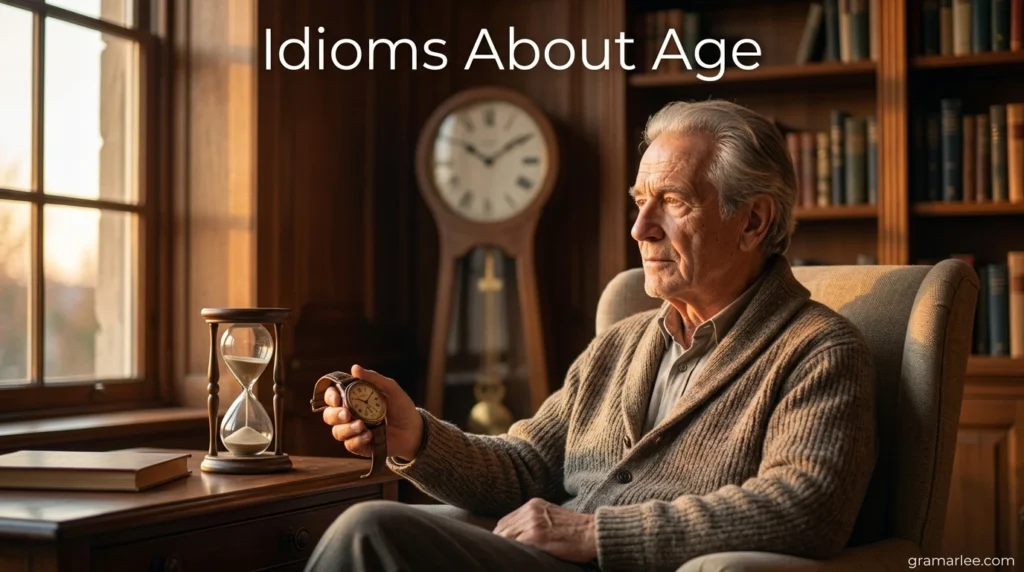
Age is a universal part of life, and it naturally appears in many English expressions. Learning idioms about age helps English learners sound more natural, understand native speakers better, and communicate ideas about youth, maturity, experience, and growing older in a colorful way.
These expressions appear in everyday conversations, books, movies, workplaces, and social situations. Understanding them can improve both speaking and listening skills while adding depth and personality to communication. Whether you are a student, professional, or language enthusiast, mastering age-related idioms can help you express yourself more confidently and accurately.
Why Learn Idioms About Age?
Age-related idioms are common in both formal and informal English. They help speakers discuss life stages, wisdom, experience, maturity, and aging in creative ways.
Benefits of Learning Age Idioms
- Improves conversational English.
- Enhances listening comprehension.
- Helps understand movies, TV shows, and books.
- Makes speech more natural and engaging.
- Expands vocabulary with culturally meaningful expressions.
Where You Will Hear These Idioms
- Workplace discussions
- Family conversations
- Social gatherings
- Literature and media
- Academic discussions
Common Idioms About Age
Over the Hill
Meaning: No longer young; past one’s peak years.
Example:
- Tom thinks turning 50 means he is over the hill.
Alternative Expressions:
- Past one’s prime
- Getting old
Typical Use Cases:
- Birthdays
- Discussions about aging
Fun Fact: The phrase originally referred to reaching the highest point of a hill and then beginning the downward journey.
Long in the Tooth
Meaning: Old, especially showing signs of age.
Example:
- That horse is getting a little long in the tooth.
Alternative Expressions:
- Aging
- Elderly
Use Cases:
- Talking about age in a humorous or gentle way.
No Spring Chicken
Meaning: Not young anymore.
Example:
- She’s no spring chicken, but she still runs marathons.
Alternative Expressions:
- Middle-aged
- Older but active
Use Cases:
- Friendly conversations about age.
Idioms About Youth and Being Young
Wet Behind the Ears
Meaning: Inexperienced or immature.
Example:
- He is still wet behind the ears when it comes to business.
Alternative Expressions:
- Green
- Inexperienced
Typical Scenarios:
- New employees
- Beginners
Young at Heart
Meaning: Having a youthful attitude regardless of age.
Example:
- My grandmother is young at heart and loves adventure.
Alternative Expressions:
- Energetic
- Youthful
Use Cases:
- Describing active older adults.
In One’s Prime
Meaning: At the peak of physical or mental abilities.
Example:
- The athlete was in her prime during the championship season.
Alternative Expressions:
- At one’s best
- Peak performance
Idioms About Experience and Wisdom
Wise Beyond One’s Years
Meaning: More mature and wise than expected for one’s age.
Example:
- The child seemed wise beyond her years.
Alternative Expressions:
- Mature for one’s age
- Exceptionally thoughtful
An Old Head on Young Shoulders
Meaning: A young person who behaves maturely.
Example:
- He has an old head on young shoulders.
Use Cases:
- Complimenting maturity.
Learned by Experience
Meaning: Gained wisdom through life events.
Example:
- She learned by experience that patience pays off.
Idioms About Growing Older
Getting On in Years
Meaning: Becoming old.
Example:
- My grandfather is getting on in years.
Alternative Expressions:
- Aging
- Advancing in age
Showing One’s Age
Meaning: Revealing signs of getting older.
Example:
- The old building is starting to show its age.
Use Cases:
- People
- Objects
- Technology
Age Before Beauty
Meaning: A humorous phrase allowing an older person to go first.
Example:
- “After you.” “Age before beauty!”
Typical Context:
- Friendly social interactions.
Idioms About Maturity
Act Your Age
Meaning: Behave appropriately for your age.
Example:
- Stop being childish and act your age.
Come of Age
Meaning: Reach adulthood or maturity.
Example:
- She came of age during a period of major social change.
Alternative Expressions:
- Become an adult
- Mature
Grow Up
Meaning: Become mature.
Example:
- He needs to grow up and take responsibility.
Funny and Humorous Age Idioms
Old Fogey
Meaning: Someone with old-fashioned ideas.
Example:
- Don’t be such an old fogey about technology.
Old as the Hills
Meaning: Extremely old.
Example:
- That legend is as old as the hills.
Not Born Yesterday
Meaning: Not easily fooled.
Example:
- You can’t trick me; I wasn’t born yesterday.
Positive Idioms About Aging
Aging Like Fine Wine
Meaning: Improving with age.
Example:
- She is aging like fine wine.
Alternative Expressions:
- Getting better with age
The Golden Years
Meaning: A pleasant period after retirement.
Example:
- They are enjoying their golden years traveling the world.
Better with Age
Meaning: Improving over time.
Example:
- Some friendships get better with age.
Age Idioms Used in Professional Settings
Senior Moment
Meaning: A temporary memory lapse.
Example:
- I forgot the meeting time—must be a senior moment.
Been Around the Block
Meaning: Experienced and knowledgeable.
Example:
- Our manager has been around the block and understands every challenge.
Veteran of the Field
Meaning: Someone with extensive experience.
Example:
- She is a veteran of the marketing industry.
Age Idioms in Literature and Media
Why Writers Use Age Idioms
Age idioms create vivid imagery and emotional depth. They help readers quickly understand a character’s maturity, wisdom, or life stage.
Examples in Stories
- Young heroes may be described as “wet behind the ears.”
- Mentors are often “wise beyond their years.”
- Older characters may be called “long in the tooth.”
Age Idioms Grouped by Context
Youth
- Wet behind the ears
- Young at heart
- In one’s prime
Aging
- Over the hill
- Long in the tooth
- Getting on in years
Wisdom
- Wise beyond one’s years
- Old head on young shoulders
- Been around the block
Humor
- No spring chicken
- Old fogey
- Age before beauty
Common Mistakes to Avoid
Taking Idioms Literally
Incorrect:
- The person is actually standing over a hill.
Correct:
- The phrase means someone is getting older.
Using Formal Alternatives Incorrectly
Some idioms are informal and may not fit professional writing.
Mixing Idioms
Avoid combining different idioms in the same sentence unless you understand both clearly.
Tips for Using Age Idioms Effectively
Learn Through Context
Read stories, articles, and conversations that include age-related idioms.
Practice Speaking
Use one new idiom each day in conversation.
Create Personal Examples
Relating idioms to your life makes them easier to remember.
Keep a Vocabulary Journal
Record meanings, examples, and situations where each idiom is used.
Fill-in-the-Blank Practice (Easy)
Choose the correct idiom.
- My grandmother is 85 but still very active. She is _______.
- He just started his first job and is still _______.
- Sarah may be only 12, but she is _______.
Answers
- Young at heart
- Wet behind the ears
- Wise beyond her years
Fill-in-the-Blank Practice (Medium)
Complete the sentences.
- After thirty years in the industry, she has really _______.
- The old bridge is beginning to _______.
- He isn’t a _______; he knows exactly what’s happening.
Answers
- Been around the block
- Show its age
- Spring chicken
Advanced Age Idiom Challenge
Match the idiom with its meaning.
IdiomMeaningOver the HillA. Very experiencedBeen Around the BlockB. Older than peak yearsWise Beyond One’s YearsC. Mature for age
Answers
- Over the Hill → B
- Been Around the Block → A
- Wise Beyond One’s Years → C
Quick Quiz About Age Idioms
Question 1
Which idiom means “inexperienced”?
A. Over the hill
B. Wet behind the ears
C. Long in the tooth
Answer: B
Question 2
Which idiom means “getting older”?
A. Getting on in years
B. Young at heart
C. Come of age
Answer: A
Question 3
Which idiom describes someone mature for their age?
A. Old fogey
B. No spring chicken
C. Wise beyond their years
Answer: C
Cultural Insights Behind Age Idioms
Respect for Experience
Many English idioms value wisdom gained through experience.
Humor About Aging
English speakers often use humor when discussing age to keep conversations lighthearted.
Positive Views of Growing Older
Not all age idioms are negative. Many celebrate wisdom, confidence, and personal growth.
Suggested Visuals and Infographics
Age Journey Timeline
Create a timeline showing:
- Youth
- Adulthood
- Middle Age
- Senior Years
Alongside matching idioms.
Age Idiom Comparison Chart
Include:
- Idiom
- Meaning
- Formality Level
- Example Sentence
Memory Flashcards
Create flashcards with the idiom on one side and meaning on the other.
Advanced Learning Activities
Story Creation Exercise
Write a short story using:
- Young at heart
- Over the hill
- Wise beyond one’s years
Discussion Prompt
Do you think age always brings wisdom? Use at least three age idioms in your answer.
Role-Play Activity
Practice a conversation between:
- A teenager
- A middle-aged professional
- A retired traveler
Include five age-related idioms naturally.
How Age Idioms Improve Communication
Using idioms about age helps speakers communicate complex ideas quickly and effectively. Instead of lengthy explanations, a single expression can describe maturity, experience, youthfulness, or aging. This makes conversations richer, more engaging, and more memorable.
FAQs
What are idioms about age?
They are expressions that describe youth, maturity, experience, or aging using figurative language.
Why should English learners study age idioms?
They improve fluency, comprehension, and natural communication.
Are age idioms common in everyday English?
Yes. Many are frequently used in casual conversation and media.
Is “over the hill” rude?
It can be humorous, but context matters. Some people may find it insensitive.
What does “young at heart” mean?
It means having a youthful spirit regardless of actual age.
Can age idioms be used in business communication?
Some can, but many are better suited to informal settings.
What is the opposite of “long in the tooth”?
A common opposite idea would be “young” or “wet behind the ears.”
Are age idioms used in literature?
Yes. Writers often use them to describe characters and themes.
How can I remember age idioms?
Practice them regularly, create examples, and use flashcards.
What is the best way to master age-related idioms?
Read, listen, speak, and write using them in real-life situations.
Conclusion
Learning idioms about age is an excellent way to improve your English fluency and cultural understanding. These expressions help describe youth, maturity, wisdom, experience, and the aging process in vivid and memorable ways. From phrases like young at heart and wise beyond one’s years to over the hill and long in the tooth, age-related idioms enrich conversations and make communication more natural.
By practicing these expressions through exercises, quizzes, discussions, and everyday use, learners can build confidence and sound more like native speakers. Keep reviewing, using, and exploring new idioms, and you will soon discover how powerful figurative language can be in expressing life’s many stages.