
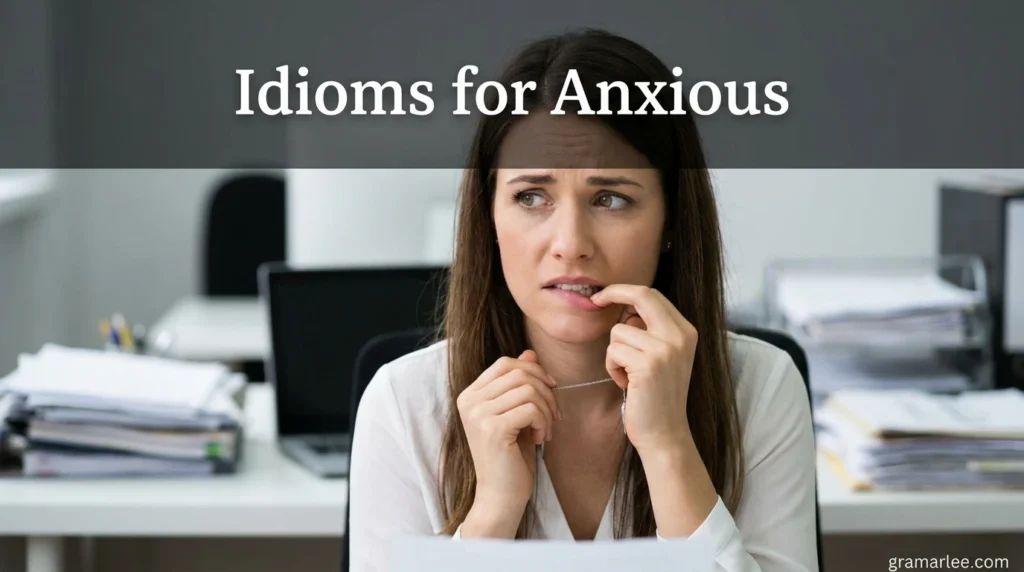
Feeling anxious is part of everyday life, but talking about it clearly in English is a skill that can make a big difference. The right idioms can help you sound natural, express emotions more accurately, and understand native speakers in real conversations, movies, meetings, and exams.
This topic matters because it connects language with real feelings, which makes communication more human and memorable. When you learn idioms for anxious feelings, you also gain confidence, empathy, and a stronger vocabulary for school, work, and daily life.
1) What “Anxious” Means in Everyday English
The word anxious usually means worried, uneasy, or nervous about something that may happen. In real conversations, people often use idioms instead of saying “I am anxious” every time. That makes their English sound more natural and expressive.
For example, compare these two sentences:
- “I’m anxious about the interview.”
- “I have butterflies in my stomach before the interview.”
Both are correct, but the second one feels more vivid and conversational.
A useful point for learners is that anxious can describe both mild nervousness and stronger worry. The idioms you choose should match the situation. A small test before a presentation may call for a light expression, while a serious problem may need a stronger one.
2) Why Learning Idioms for Anxious Feelings Helps
Learning idioms for anxious emotions is useful for more than vocabulary building. It helps you understand tone, culture, and hidden meaning. Native speakers often use idioms to soften emotions, make jokes, or connect with listeners.
Here are three big benefits:
- You sound more natural. Idioms make your English less robotic.
- You understand others better. Movies, news, and conversations are full of figurative language.
- You express feelings more precisely. Not all worry is the same; idioms help show the difference.
These expressions are especially valuable for students, professionals, customer service workers, teachers, and anyone who speaks English in social or workplace settings.
3) Idioms for Mild Nervousness
These idioms work when the feeling is light, temporary, or normal.
Have butterflies in your stomach
Meaning: To feel nervous or excited before something important. Example: “I had butterflies in my stomach before my first speech.” Alternative expression: Feel jittery, feel excited and nervous. Use case: Exams, interviews, first dates, performances. Fun fact: The image comes from the fluttery feeling people notice in the stomach when anxious.
Feel on edge
Meaning: To feel tense, unable to relax, or easily irritated. Example: “She felt on edge all morning before the meeting.” Alternative expression: Be tense, be uneasy. Use case: Busy workdays, waiting for results, stressful travel.
Get worked up
Meaning: To become upset, nervous, or emotionally overwhelmed. Example: “Don’t get worked up about the small mistake.” Alternative expression: Get stressed out, get upset. Use case: Everyday conflict, family discussions, deadlines.
4) Idioms for Strong Anxiety and Panic
When anxiety feels stronger, these idioms are more powerful and dramatic.
Be a nervous wreck
Meaning: To feel extremely nervous or emotionally exhausted. Example: “I was a nervous wreck before the final interview.” Alternative expression: Be very anxious, be completely stressed out. Use case: High-pressure events, major life changes.
Freak out
Meaning: To panic, become very scared, or react strongly. Example: “I freaked out when I lost my phone before the trip.” Alternative expression: Panic, lose your cool. Use case: Sudden problems, emergencies, shocking news. Tip: This is informal, so use it in casual speech, not in formal writing.
Be in a state
Meaning: To be extremely upset, panicked, or emotionally disturbed. Example: “He was in a state after hearing the bad news.” Alternative expression: Be highly distressed. Use case: Serious emotional situations.
5) Idioms for Before an Important Event
These are excellent for interviews, presentations, performances, or tests.
Sweat bullets
Meaning: To be extremely nervous. Example: “I was sweating bullets while waiting for my results.” Alternative expression: Be very tense, be highly anxious. Use case: Big presentations, job interviews, public speaking.
Lose sleep over something
Meaning: To worry so much that it affects your sleep. Example: “She lost sleep over the final project.” Alternative expression: Stay up worrying, stress over something. Use case: Deadlines, family problems, financial stress.
Feel the pressure
Meaning: To sense strong stress or responsibility. Example: “The team felt the pressure before the competition.” Alternative expression: Feel stressed, feel the heat. Use case: Exams, sales targets, competitions.
6) Idioms for Overthinking and Constant Worry
These expressions are perfect when the mind does not stop.
Make a mountain out of a molehill
Meaning: To treat a small problem as if it were huge. Example: “Try not to make a mountain out of a molehill.” Alternative expression: Overreact, exaggerate the problem. Use case: Arguments, small mistakes, minor delays. Fun fact: This classic idiom contrasts something tiny, a molehill, with something enormous, a mountain.
Worry yourself sick
Meaning: To worry so much that it feels emotionally or physically exhausting. Example: “Don’t worry yourself sick about the future.” Alternative expression: Overthink, stress too much. Use case: Health, family, finances, uncertain plans.
Go down a rabbit hole
Meaning: To get deeply lost in worrying thoughts or research. Example: “I went down a rabbit hole reading about every possible outcome.” Alternative expression: Spiral, overanalyze. Use case: Online searches, future planning, late-night thinking.
7) Idioms for Restlessness and Unease
These idioms describe a body or mind that cannot settle.
Be wound up
Meaning: To be tense, agitated, or unable to relax. Example: “He was wound up before his presentation.” Alternative expression: Be tense, be keyed up. Use case: Work stress, family conflict, busy schedules. Note: In British English, this is very common.
Have ants in your pants
Meaning: To feel restless and unable to sit still. Example: “The children had ants in their pants before the trip.” Alternative expression: Be fidgety, be restless. Use case: Excited children, long waiting periods, nervous energy.
Be all twisted up
Meaning: To feel emotionally confused, tense, or anxious. Example: “She was all twisted up after the argument.” Alternative expression: Be emotionally tangled. Use case: Relationship stress, family problems, tough decisions.
8) Idioms for Calming Down and Recovery
These expressions help when the anxious moment has passed.
Catch your breath
Meaning: To rest and recover after stress or shock. Example: “Take a minute to catch your breath before we continue.” Alternative expression: Calm down, recover. Use case: After a fast walk, a stressful meeting, or emotional news.
Breathe easy
Meaning: To relax because a stressful situation has improved. Example: “You can breathe easy now; the report is finished.” Alternative expression: Relax, feel relieved. Use case: Exams, deadlines, medical results, travel problems.
Get back on your feet
Meaning: To recover emotionally after a difficult period. Example: “It took her time to get back on her feet after the setback.” Alternative expression: Recover, bounce back. Use case: Personal setbacks, job loss, disappointment.
9) Idioms for Work and Professional Life
Professionals need polite, natural ways to talk about stress without sounding too casual.
Feel under the gun
Meaning: To feel pressured because of a deadline or responsibility. Example: “The marketing team felt under the gun all week.” Alternative expression: Be under pressure, be on a tight deadline. Use case: Office projects, client work, business targets.
Be stretched thin
Meaning: To have too many responsibilities and too little time. Example: “I’m stretched thin this month, so I may need help.” Alternative expression: Be overloaded, be overcommitted. Use case: Workload management, team planning, leadership communication.
Keep your cool
Meaning: To stay calm under stress. Example: “She kept her cool during the difficult interview.” Alternative expression: Stay calm, remain composed. Use case: Customer service, negotiations, presentations.
10) Idioms for Students and Exam Pressure
Students often need language that shows stress in a relatable way.
Hit the books
Meaning: To study hard. Example: “I need to hit the books because exams start next week.” Alternative expression: Study seriously, buckle down. Use case: Exam preparation, assignments, final projects.
Crack under pressure
Meaning: To fail to cope with stress. Example: “He cracked under pressure during the final round.” Alternative expression: Break down, lose control. Use case: Exams, sports, competitions, presentations. Tip: Use this carefully; it can sound strong and critical.
Have a lot on your plate
Meaning: To have many responsibilities at once. Example: “She has a lot on her plate, so be patient.” Alternative expression: Be busy, be overloaded. Use case: Students balancing classes, work, and family.
11) Grouping Idioms by Context
One smart way to learn idioms for anxious feelings is to group them by situation. This makes memory easier and usage more natural.
For mild nervousness
Use: butterflies in your stomach, feel on edge, get worked up
For serious stress
Use: nervous wreck, sweat bullets, feel under the gun
For overthinking
Use: make a mountain out of a molehill, worry yourself sick, go down a rabbit hole
For recovery
Use: catch your breath, breathe easy, get back on your feet
This context-based method helps you choose the right idiom quickly in speech and writing. It also improves fluency because you stop translating word by word.
12) Tips for Effective Use and Common Mistakes to Avoid
To use idioms well, you need more than memorization.
Tip 1: Match the tone. Some idioms are casual, while others are better for professional settings. For example, “freak out” is informal, but “feel under the gun” can work in a workplace conversation.
Tip 2: Learn the whole phrase. Idioms usually cannot be changed much. Say “butterflies in my stomach,” not “butterfly in my stomach.”
Tip 3: Use them naturally, not everywhere. Too many idioms in one paragraph can sound forced.
Common mistake 1: Taking idioms literally. Nobody is actually full of butterflies or ants.
Common mistake 2: Using a casual idiom in a formal email. Avoid slangy expressions when writing to a manager or client.
Common mistake 3: Mixing idioms. Do not combine two expressions incorrectly, such as “I’m sweating butterflies.”
Visual and infographic ideas
A useful infographic could show:
- A scale from mild nervousness to panic
- Idioms grouped by context
- Example situations like exams, interviews, and public speaking
- Color coding for casual vs professional idioms
This kind of visual makes the topic easier to review and remember.
13) Fun Facts, Origins, and Cultural Notes
Idioms are cultural shortcuts. Many come from everyday life, old stories, or vivid images.
“Have butterflies in your stomach” works because anxiety often feels like fluttering movement inside the body. “Make a mountain out of a molehill” uses a tiny animal hill to show exaggeration. “Go down a rabbit hole” became popular through literature and now means getting deeply lost in a topic.
These origins matter because they make idioms easier to remember. Once you see the picture behind the phrase, the meaning sticks.
Also, some idioms are more common in American English, while others are heard more in British English. For example, “wound up” is especially natural in British usage, while “freak out” is widely used in American casual speech.
14) Practice Zone: Fill-in-the-Blanks, Quiz, and Answers
Here is a mixed-difficulty practice set to test your understanding.
Fill in the blanks
Easy
- I had __________ before my first presentation.
- Don’t __________ out about one small mistake.
Medium 3. She was a __________ before the exam results came out. 4. He lost __________ over the deadline and couldn’t sleep.
Advanced 5. Stop making a mountain out of a __________. 6. The whole team felt __________ the gun before launch day.
Quiz
Choose the best idiom:
- “He is very restless and cannot sit still.” A. keep your cool B. have ants in your pants C. breathe easy
- “She is overwhelmed by too many tasks.” A. have a lot on your plate B. catch your breath C. hit the books
- “The stressful moment is over and you can relax now.” A. feel under the gun B. breathe easy C. crack under pressure
Answers
Fill in the blanks:
- butterflies in my stomach
- freak
- nervous wreck
- sleep
- molehill
- under
Quiz:
- B
- A
- B
FAQs
1. What are idioms for anxious?
They are fixed expressions that describe nervousness, worry, pressure, or panic in a natural, colorful way.
2. Are idioms for anxious feelings formal or informal?
Both exist. Some, like “feel under the gun,” can fit professional speech, while others, like “freak out,” are clearly informal.
3. Can I use these idioms in writing?
Yes, especially in essays, stories, blogs, and spoken English practice. Use formal judgment in business or academic writing.
4. Which idioms are best for students?
“Have butterflies in your stomach,” “hit the books,” and “have a lot on your plate” are especially useful.
5. Which idioms work in the workplace?
“Feel under the gun,” “be stretched thin,” and “keep your cool” are strong choices for professional situations.
6. What is the difference between anxious and nervous?
“Nervous” often suggests immediate tension, while “anxious” can suggest longer or deeper worry. Idioms help show that difference.
7. How many idioms should I learn first?
Start with 8 to 10 common ones. Mastering a few useful idioms is better than memorizing many you never use.
8. Are these idioms used in British and American English?
Many are used in both, but frequency can differ. Some expressions feel more natural in one variety than the other.
9. How can I remember idioms faster?
Learn them in groups by situation, make your own example sentences, and review them with short quizzes.
10. What is the best way to practice idioms for anxious?
Use them in speaking, journaling, flashcards, and role-play conversations about interviews, exams, or stressful days.
Conclusion
Idioms for anxious feelings give you a richer, more natural way to talk about stress, nervousness, and recovery. They help you sound fluent, understand native speakers, and express emotions with clarity and confidence. The best way to learn them is to study by context, practice them in real sentences, and repeat them often until they feel natural.
Start with a few high-frequency idioms, use them in daily conversation, and build your vocabulary step by step. With regular practice, these expressions will become a powerful part of your English.