
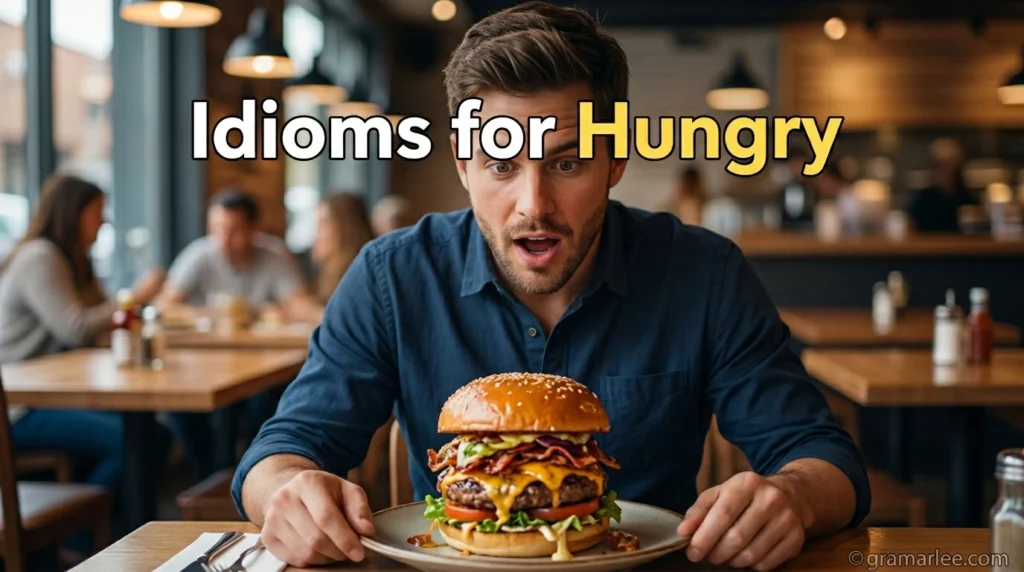
Feeling hungry is a universal human experience, but English speakers rarely say only “I’m hungry.” Instead, they use colorful idioms and expressions that make conversations more vivid, natural, and engaging. Learning idioms for hungry helps English learners sound more fluent, understand native speakers better, and communicate emotions with greater accuracy.
Whether you’re a student improving your vocabulary, a professional working in English-speaking environments, or simply a language enthusiast, mastering these expressions can enhance both your speaking and writing skills. These idioms also add personality and humor to everyday conversations. In this comprehensive guide, you’ll discover meanings, examples, usage tips, exercises, and much more.
Why Learn Idioms for Hungry?
Understanding idioms related to hunger offers several benefits:
Improves Communication Skills
Native speakers frequently use idioms instead of literal expressions. Knowing them helps you communicate naturally.
Enhances Listening Comprehension
Movies, TV shows, podcasts, and conversations often include hunger-related idioms.
Makes Speech More Engaging
Using idioms adds color and personality to your language.
Builds Cultural Understanding
Many idioms reflect cultural habits, traditions, and historical influences.
Most Common Idioms for Hungry
These are some of the most frequently used idioms and expressions to describe hunger.
1. Hungry as a Bear
Meaning: Extremely hungry.
Example:
- After hiking all day, I was hungry as a bear.
Alternative Expressions:
- Starving
- Ravenous
- Famished
Typical Use Cases:
- After exercise
- After a long workday
- Before a big meal
Fun Fact: Bears eat enormous amounts of food before hibernation, inspiring this comparison.
2. Starving to Death
Meaning: Very hungry, though not literally.
Example:
- Hurry up with dinner! I’m starving to death.
Alternative Expressions:
- Absolutely starving
- Famished
Common Scenario: Waiting for food after a busy day.
3. Could Eat a Horse
Meaning: So hungry that you feel capable of eating an enormous amount of food.
Example:
- I skipped lunch. I could eat a horse right now.
Alternative Expressions:
- Ravenous
- Hungry as a wolf
Animal-Based Idioms for Hungry
Animals often appear in English idioms because they create vivid mental images.
Hungry as a Wolf
Meaning: Extremely hungry.
Example:
- The kids came home from school hungry as wolves.
Use Case: Describing strong hunger after physical activity.
Eat Like a Horse
Meaning: To eat large quantities of food.
Example:
- He eats like a horse but never gains weight.
Difference from “Could Eat a Horse”:
- “Eat like a horse” describes eating habits.
- “Could eat a horse” describes current hunger.
Peckish
Meaning: Slightly hungry.
Example:
- I’m feeling a bit peckish. Let’s grab a snack.
Typical Situation: Mid-afternoon hunger.
Strong Idioms for Extreme Hunger
Some expressions emphasize intense hunger.
Famished
Meaning: Extremely hungry.
Example:
- We were famished after the six-hour journey.
Ravenous
Meaning: Very hungry and eager to eat.
Example:
- The athletes were ravenous after training.
Empty as a Drum
Meaning: Feeling completely empty from hunger.
Example:
- My stomach feels empty as a drum.
Informal Expressions for Hungry
These are common in casual conversations.
My Stomach Is Growling
Meaning: Hunger is causing stomach noises.
Example:
- My stomach is growling. Let’s get lunch.
Running on Empty
Meaning: Lacking energy because of hunger or exhaustion.
Example:
- I haven’t eaten all day. I’m running on empty.
Need a Bite to Eat
Meaning: Wanting some food.
Example:
- Let’s stop somewhere. I need a bite to eat.
Funny Idioms for Hungry
Humorous expressions make conversations memorable.
I Could Eat the Menu
Meaning: Extremely hungry.
Example:
- That restaurant smells amazing. I could eat the menu.
My Eyes Are Bigger Than My Stomach
Meaning: Taking more food than you can eat.
Example:
- I ordered three burgers. My eyes were bigger than my stomach.
So Hungry I Could Eat Anything
Meaning: Not being picky because of hunger.
Example:
- After camping all weekend, I was so hungry I could eat anything.
Idioms Related to Eating and Appetite
These expressions focus on appetite rather than hunger itself.
Work Up an Appetite
Meaning: Become hungry through activity.
Example:
- Gardening all afternoon really worked up an appetite.
Have a Healthy Appetite
Meaning: Enjoy eating regularly and enthusiastically.
Example:
- Teenagers often have a healthy appetite.
Lose Your Appetite
Meaning: No longer feel hungry.
Example:
- The bad news made me lose my appetite.
Idioms for Hungry in Professional Settings
Certain expressions are more appropriate in workplaces.
Grab a Quick Bite
Meaning: Eat something quickly.
Example:
- Let’s grab a quick bite before the meeting.
Skip a Meal
Meaning: Miss an eating opportunity.
Example:
- I skipped a meal because of my busy schedule.
Need Some Fuel
Meaning: Need food for energy.
Example:
- We need some fuel before continuing the project.
Hungry Idioms Used in Literature and Media
Authors and screenwriters frequently use hunger idioms.
Examples
- “He was hungry as a wolf after the journey.”
- “I could eat a horse.”
- “The children were starving.”
These phrases create vivid imagery and emotional connection.
Context-Based Grouping of Hungry Idioms
Casual Conversations
- Peckish
- Need a bite
- Stomach growling
Extreme Hunger
- Starving to death
- Famished
- Ravenous
Humorous Situations
- Could eat a horse
- Could eat the menu
- Eyes bigger than stomach
Workplace Settings
- Grab a quick bite
- Need some fuel
How to Use Hungry Idioms Naturally
Match the Situation
Use strong idioms only when appropriate.
Good:
- After a marathon, I was starving.
Less Natural:
- After breakfast, I’m starving to death.
Consider Formality
Formal situations require simpler expressions.
Formal:
- I’m quite hungry.
Informal:
- I could eat a horse.
Practice with Real Conversations
Listen to movies, podcasts, and native speakers.
Common Mistakes to Avoid
Using Idioms Literally
Incorrect:
- I could eat a horse because horse meat is available.
Correct:
- I could eat a horse means you’re extremely hungry.
Mixing Idioms
Incorrect:
- I eat like a horse because I’m peckish.
Correct:
- I eat like a horse because I have a huge appetite.
Overusing Strong Expressions
Reserve expressions like “starving to death” for significant hunger.
Alternative Words for Hungry
Expand your vocabulary with these synonyms.
Mild Hunger
- Peckish
- Snacky
- Slightly hungry
Moderate Hunger
- Hungry
- Ready to eat
- Needing food
Extreme Hunger
- Famished
- Ravenous
- Starving
Practice Exercises: Fill in the Blanks
Easy Level
Choose the correct expression.
- After soccer practice, I was _________.
- a) hungry as a bear
- b) sleepy as a bear
- My stomach is _________.
- a) dancing
- b) growling
Answers:
- hungry as a bear
- growling
Medium Level
Fill in the blanks.
- I skipped lunch, so I could eat a _________.
- The hike really worked up an _________.
Answers:
- horse
- appetite
Advanced Level
Choose the most suitable idiom.
- You ordered too much food.
- You’re slightly hungry before dinner.
Answers:
- My eyes are bigger than my stomach.
- I’m peckish.
Quick Quiz on Idioms for Hungry
Question 1
What does “peckish” mean?
A. Extremely hungry
B. Slightly hungry
C. Full
Answer: B
Question 2
Which idiom means very hungry?
A. Hungry as a wolf
B. Cold as ice
C. Busy as a bee
Answer: A
Question 3
Which expression means taking too much food?
A. Work up an appetite
B. Eyes bigger than stomach
C. Running on empty
Answer: B
Tips for Remembering Hungry Idioms
Use Visual Associations
Imagine a huge bear searching for food.
Create Personal Examples
Connect idioms to your daily life.
Practice Speaking
Use one new idiom each day.
Learn in Context
Study idioms through stories and conversations.
Visual and Infographic Ideas
If you’re creating educational content, consider these visuals:
Hunger Intensity Scale
Peckish → Hungry → Famished → Ravenous → Starving
Animal Idiom Chart
AnimalIdiomMeaningBearHungry as a bearVery hungryWolfHungry as a wolfExtremely hungryHorseEat like a horseEats a lot
Conversation Flowchart
Feeling hungry? ↓ Slightly hungry → Peckish
Very hungry → Famished
Extremely hungry → Could eat a horse
FAQs
What is the most common idiom for hungry?
“Could eat a horse” is one of the most popular and widely understood idioms for extreme hunger.
Is “peckish” British or American English?
It is more common in British English but is understood in many English-speaking countries.
Can I use hungry idioms in formal writing?
Most hungry idioms are informal. Formal writing generally uses words like “hungry,” “famished,” or “in need of food.”
What does “eat like a horse” mean?
It means someone regularly eats a large amount of food.
Are hungry idioms useful for English exams?
Yes. Understanding idioms improves reading comprehension, listening skills, and vocabulary knowledge.
What’s the difference between “famished” and “peckish”?
“Famished” means extremely hungry, while “peckish” means only slightly hungry.
How can I remember hungry idioms more easily?
Use visual images, create personal examples, and practice them in daily conversations.
Which hungry idiom is the funniest?
Many learners find “I could eat a horse” amusing because it exaggerates hunger in a humorous way.
Conclusion
Learning idioms for hungry is an excellent way to make your English more natural, expressive, and engaging. From classic expressions like hungry as a bear, hungry as a wolf, and could eat a horse to everyday phrases such as peckish and running on empty, these idioms help you describe hunger with precision and personality.
The key to mastering these expressions is consistent practice. Use them in conversations, writing exercises, and language-learning activities. Pay attention to how native speakers use them in movies, books, and everyday discussions. Over time, these idioms will become a natural part of your vocabulary, helping you communicate more confidently and fluently in English.