
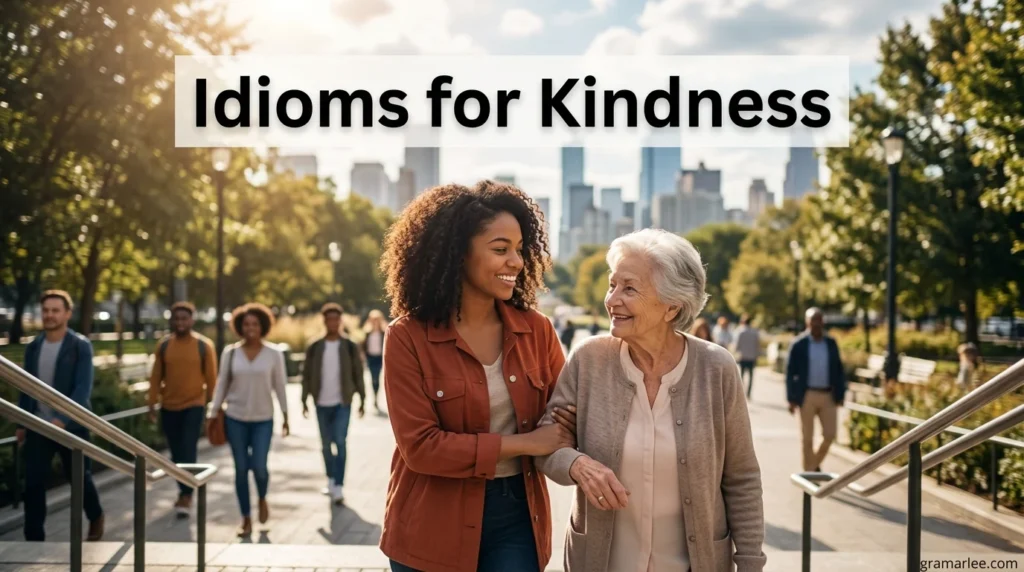
Kindness is one of the most valued human qualities across cultures and languages. Learning idioms for kindness helps English learners communicate warmth, generosity, compassion, and helpfulness in a more natural and expressive way. These idioms frequently appear in conversations, books, movies, workplaces, and everyday interactions.
Understanding kindness-related idioms can improve your vocabulary, strengthen your communication skills, and help you better understand native English speakers. Whether you are a student, professional, teacher, or language enthusiast, these expressions will make your English sound more fluent and emotionally intelligent.
In this comprehensive guide, you’ll discover the meanings, examples, origins, usage tips, exercises, and practical applications of the most common idioms for kindness.
What Are Idioms for Kindness?
Idioms for kindness are expressions that describe generosity, compassion, helpfulness, thoughtfulness, and caring behavior. Their meanings cannot always be understood from the individual words alone.
Why Learn Kindness Idioms?
- Improve conversational English
- Sound more natural and fluent
- Express emotions effectively
- Understand movies, books, and TV shows
- Build stronger personal and professional relationships
Common Themes in Kindness Idioms
- Helping others
- Giving support
- Showing compassion
- Performing good deeds
- Being generous
Most Popular Idioms for Kindness
1. Have a Heart
Meaning: To show compassion or sympathy.
Example:
- Have a heart and give the poor man another chance.
Alternative Expressions:
- Show compassion
- Be understanding
Typical Use Cases:
- Personal relationships
- Charitable situations
2. Kindness of One’s Heart
Meaning: Doing something because you genuinely care.
Example:
- She helped me out of the kindness of her heart.
Alternative Expressions:
- Pure generosity
- Genuine concern
3. Give Someone a Hand
Meaning: Help someone.
Example:
- Can you give me a hand with these boxes?
Typical Scenario:
- Workplaces
- Home tasks
Idioms About Helping Others
Go Out of Your Way
Meaning: Make a special effort to help someone.
Example:
- My teacher went out of her way to help me succeed.
Fun Fact: The phrase originally referred to physically taking a longer route to assist someone.
Lend a Helping Hand
Meaning: Offer assistance.
Example:
- Volunteers came to lend a helping hand after the flood.
Be There for Someone
Meaning: Provide emotional or practical support.
Example:
- She was always there for me during difficult times.
Idioms About Generosity
Give the Shirt Off Your Back
Meaning: Be extremely generous.
Example:
- He would give the shirt off his back to help a friend.
Use Case: Describing exceptionally generous people.
Open-Handed
Meaning: Generous with money or resources.
Example:
- The company was open-handed with donations.
Dig Deep
Meaning: Give generously, especially money.
Example:
- People were asked to dig deep for charity.
Idioms About Compassion and Empathy
Walk in Someone’s Shoes
Meaning: Understand another person’s situation.
Example:
- Before criticizing him, try walking in his shoes.
Feel for Someone
Meaning: Sympathize with someone.
Example:
- I really feel for families affected by the disaster.
Soft Heart
Meaning: A compassionate personality.
Example:
- Despite his tough appearance, he has a soft heart.
Idioms for Being Friendly and Warm
Warm-Hearted
Meaning: Friendly and caring.
Example:
- She is one of the most warm-hearted people I know.
Big-Hearted
Meaning: Very kind and generous.
Example:
- Everyone appreciates his big-hearted nature.
Friendly Face
Meaning: Someone who appears welcoming.
Example:
- It was comforting to see a friendly face in the crowd.
Idioms Related to Good Deeds
Do a Good Turn
Meaning: Perform a kind act.
Example:
- He did me a good turn when my car broke down.
Pay It Forward
Meaning: Return kindness by helping someone else.
Example:
- Someone paid for my coffee, so I decided to pay it forward.
Do the Right Thing
Meaning: Act morally and kindly.
Example:
- She chose to do the right thing and help.
Idioms for Support and Encouragement
Stand By Someone
Meaning: Support someone during difficulties.
Example:
- True friends stand by each other.
Lift Someone Up
Meaning: Encourage emotionally.
Example:
- Her words lifted me up after a bad day.
Back Someone Up
Meaning: Offer support.
Example:
- My colleagues backed me up during the presentation.
Idioms for Selfless Behavior
Put Others First
Meaning: Prioritize other people’s needs.
Example:
- Nurses often put others first.
Bend Over Backward
Meaning: Make every effort to help.
Example:
- She bent over backward to make everyone comfortable.
Go the Extra Mile
Meaning: Do more than expected.
Example:
- Great customer service means going the extra mile.
Idioms for Charity and Giving
Open Your Heart
Meaning: Show kindness and generosity.
Example:
- The campaign encouraged people to open their hearts.
Reach Out
Meaning: Offer help or support.
Example:
- Many organizations reached out to affected families.
Give Back
Meaning: Contribute to society.
Example:
- Successful people often look for ways to give back.
Kindness Idioms in Workplace Communication
Building Team Relationships
Common workplace kindness idioms include:
- Give someone a hand
- Go the extra mile
- Stand by someone
- Back someone up
Professional Example
- Our manager always goes the extra mile for employees.
Why They Matter
They promote:
- Collaboration
- Leadership
- Positive culture
- Employee morale
Kindness Idioms in Daily Conversations
Family Context
- Have a heart.
- Be there for someone.
Friendship Context
- Stand by someone.
- Lift someone up.
Community Context
- Lend a helping hand.
- Give back.
Using these naturally improves conversational fluency.
Common Mistakes When Using Kindness Idioms
Using Them Literally
Incorrect:
- He gave me his actual shirt, so he gave the shirt off his back.
Correct:
- He is so generous that he’d give the shirt off his back.
Using Formal Idioms in Academic Writing
Some idioms work best in conversation rather than formal essays.
Mixing Similar Expressions
Avoid combining different idioms incorrectly.
Incorrect:
- He lent me the shirt off his back.
Correct:
- He gave me a hand.
Tips for Using Kindness Idioms Naturally
Learn Through Context
Read stories and articles containing idioms.
Practice Speaking
Use one new idiom daily in conversation.
Keep an Idiom Journal
Record:
- Meaning
- Example sentence
- Synonyms
- Personal example
Watch English Media
Movies and TV shows provide authentic examples.
Kindness Idioms Grouped by Context
Helping Someone
- Give someone a hand
- Lend a helping hand
- Reach out
Emotional Support
- Be there for someone
- Stand by someone
- Lift someone up
Generosity
- Give the shirt off your back
- Open-handed
- Big-hearted
Compassion
- Have a heart
- Feel for someone
- Walk in someone’s shoes
Practice Exercises on Idioms for Kindness
Easy Level
Fill in the blanks.
- Can you ______ me a hand?
- She helped me out of the kindness of her ______.
- He always goes the extra ______.
Answers:
- give
- heart
- mile
Medium Level
Choose the correct idiom.
- Someone who is very generous:
- a) Big-hearted
- b) Cold-hearted
- c) Hard-headed
- To understand another person’s experience:
- a) Dig deep
- b) Walk in someone’s shoes
- c) Reach out
Answers:
- a
- b
Advanced Level
Rewrite the sentence using an idiom.
- She always supports me during hard times.
- He made a special effort to help.
Suggested Answers:
- She always stands by me.
- He went out of his way to help.
Fun Facts and Origins of Kindness Idioms
Give the Shirt Off Your Back
Originates from the idea of sharing even your most basic possession.
Walk in Someone’s Shoes
The expression emphasizes empathy through imagining another person’s experiences.
Pay It Forward
Became widely popular after the novel and movie Pay It Forward.
Go the Extra Mile
Derived from ancient Roman travel practices and later popularized through historical and religious teachings.
Visual and Infographic Ideas for Learning Kindness Idioms
Infographic 1: Types of Kindness Idioms
Categories:
- Compassion
- Generosity
- Support
- Friendship
Infographic 2: Kindness Idiom Mind Map
Center:
- Kindness
Branches:
- Help
- Care
- Support
- Give
Infographic 3: Daily Conversation Examples
Show dialogues using:
- Have a heart
- Give someone a hand
- Go the extra mile
Visual learning significantly improves retention.
Kindness Idioms Used in Literature and Books
Why Authors Use Kindness Idioms
Kindness idioms help writers create relatable and emotional characters. They make stories more engaging and help readers connect with acts of generosity and compassion.
Common Literary Examples
Have a Heart
Meaning: Show sympathy and compassion.
Example:
- The old woman asked the landlord to have a heart and lower the rent.
Big-Hearted
Meaning: Extremely generous and caring.
Example:
- The novel’s hero was known for his big-hearted nature.
How Readers Benefit
- Better understanding of English novels
- Improved reading comprehension
- Stronger vocabulary retention
Kindness Idioms Commonly Used in Movies and TV Shows
Why These Idioms Appear Frequently
Movies often portray friendships, family relationships, and emotional moments where kindness idioms naturally fit.
Popular Examples
Be There for Someone
Meaning: Offer support during difficult times.
Movie Dialogue Example:
- I’ll always be there for you.
Go the Extra Mile
Meaning: Make an additional effort.
Example:
- The coach went the extra mile to help the team succeed.
Viewing Tip
Write down new idioms you hear while watching English-language content.
Kindness Idioms for Students
Classroom Situations
Students often use kindness-related expressions when helping classmates.
Useful Idioms
Give Someone a Hand
Meaning: Help someone.
Example:
- Sarah gave me a hand with my science project.
Reach Out
Meaning: Contact someone to offer support.
Example:
- The teacher reached out to struggling students.
Academic Benefits
- Better classroom communication
- Improved speaking confidence
- Enhanced social skills
Kindness Idioms for Professionals and Workplace Success
Building Positive Workplace Relationships
Kindness creates trust and cooperation in professional environments.
Essential Workplace Idioms
Back Someone Up
Meaning: Support a colleague.
Example:
- My manager backed me up during the meeting.
Stand By Someone
Meaning: Remain loyal and supportive.
Example:
- Great leaders stand by their employees.
Career Advantages
- Better teamwork
- Strong leadership skills
- Positive professional reputation
Kindness Idioms for Friendship
Supporting Friends Through Challenges
Friendship often involves kindness, empathy, and encouragement.
Useful Friendship Idioms
Lift Someone Up
Meaning: Encourage someone emotionally.
Example:
- Her positive words lifted me up.
Be There for Someone
Meaning: Provide support when needed.
Example:
- Good friends are always there for each other.
Typical Scenarios
- Emotional support
- Celebrating achievements
- Difficult life situations
Kindness Idioms for Family Relationships
Strengthening Family Bonds
Families often express kindness through support and sacrifice.
Common Family Idioms
Put Others First
Meaning: Prioritize another person’s needs.
Example:
- Parents often put others first.
Have a Soft Heart
Meaning: Be naturally compassionate.
Example:
- My grandmother has a soft heart for animals.
Benefits of Learning These Idioms
- More natural family conversations
- Better emotional expression
Positive Personality Idioms Related to Kindness
Big-Hearted
Meaning: Extremely generous.
Warm-Hearted
Meaning: Friendly and caring.
Tender-Hearted
Meaning: Easily moved by compassion.
Golden Heart
Meaning: A truly kind nature.
Example:
- Everyone loves her because she has a heart of gold.
Alternative Expression:
- Kind soul
Idioms That Contrast Kindness and Unkindness
Why Learn Opposites?
Understanding opposite expressions improves vocabulary depth.
Kindness vs Unkindness
Kindness IdiomOpposite ExpressionHave a HeartHeartlessBig-HeartedMean-SpiritedWarm-HeartedCold-HeartedLend a Helping HandTurn Your Back On Someone
Example Comparison
- A warm-hearted person helps others.
- A cold-hearted person ignores others’ problems.
Mini Dialogue Examples Using Kindness Idioms
Dialogue 1: Friends
Ali: I’m struggling with my homework.
Sara: Don’t worry. I’ll give you a hand.
Dialogue 2: Workplace
Manager: Thank you for going the extra mile.
Employee: I’m happy to help.
Dialogue 3: Community Service
Volunteer: We came to lend a helping hand.
Organizer: We appreciate your support.
Advanced Challenge: Match the Idiom
Difficulty Level: Advanced
Match the idiom with its meaning.
- Give the shirt off your back
- Walk in someone’s shoes
- Go out of your way
- Pay it forward
Meanings
A. Understand another person’s experience
B. Help someone because someone helped you
C. Be extremely generous
D. Make a special effort to help
Answers
1-C
2-A
3-D
4-B
Kindness Quotes That Connect with These Idioms
Inspirational Quote 1
“Kindness is a language which the deaf can hear and the blind can see.”
Inspirational Quote 2
“No act of kindness, no matter how small, is ever wasted.”
How Quotes Help Learning
- Improve memory retention
- Provide real-world context
- Increase motivation to practice English
FAQs
What are idioms for kindness?
They are expressions that describe caring, generosity, compassion, and helpful behavior.
Why should English learners study kindness idioms?
They improve fluency, listening comprehension, and natural communication skills.
Which kindness idiom is most commonly used?
“Give someone a hand” is one of the most frequently used kindness-related idioms.
Are kindness idioms suitable for professional settings?
Yes. Expressions like “go the extra mile” and “stand by someone” are common in workplaces.
How can I remember kindness idioms easily?
Practice them in sentences, conversations, and writing exercises.
Can kindness idioms improve speaking skills?
Absolutely. They help speakers sound more natural and expressive.
How many kindness idioms should beginners learn first?
Start with 10–15 commonly used idioms and gradually expand your vocabulary.
Conclusion
Learning idioms for kindness is a powerful way to enhance your English communication skills while expressing compassion, generosity, empathy, and support. These idioms appear frequently in conversations, workplaces, literature, and media, making them valuable tools for both language learners and professionals.
By understanding expressions such as have a heart, give someone a hand, go the extra mile, stand by someone, and pay it forward, you can communicate more naturally and connect with others on a deeper level. Practice these idioms regularly through speaking, writing, reading, and listening activities to build confidence and fluency.
Remember, kindness is a universal language—and mastering these kindness-related idioms will help you express that language beautifully in English.