
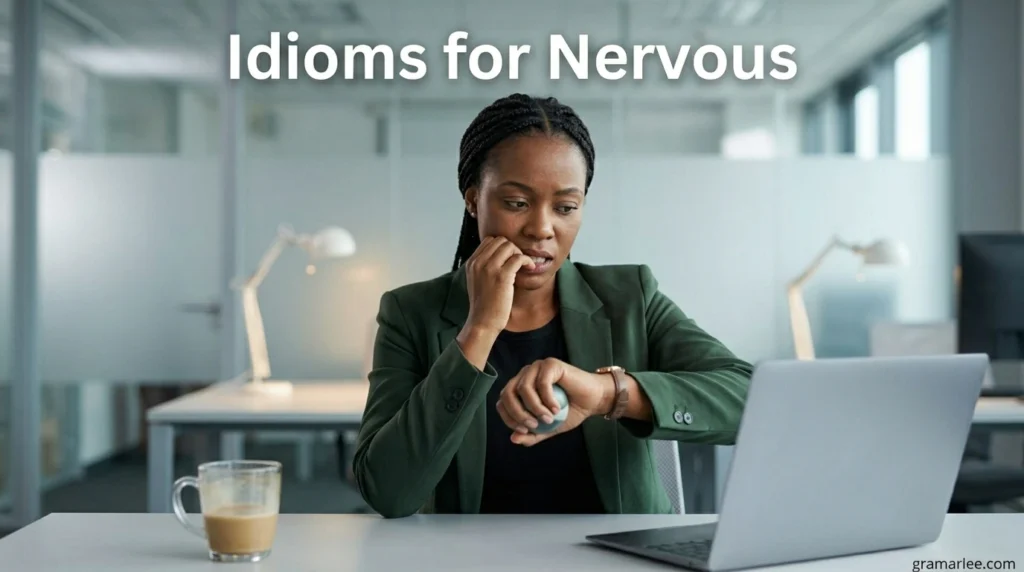
Feeling nervous is a universal human experience. Whether you are preparing for an exam, attending a job interview, giving a presentation, or meeting someone for the first time, nervousness can affect anyone. Learning idioms for nervous helps English learners express emotions naturally and understand native speakers more effectively.
These colorful expressions make conversations more engaging and allow you to communicate feelings with greater accuracy. Understanding nervous idioms offers both practical and emotional benefits.
It improves speaking and writing skills, increases confidence in everyday conversations, and helps learners recognize common phrases in movies, books, and social media. By mastering these idioms, students, professionals, and language enthusiasts can sound more fluent and expressive in real-life situations.
What Are Idioms for Nervous?
Idioms for nervous are expressions used to describe feelings of anxiety, worry, fear, stress, or excitement. The meaning of an idiom is often different from the literal meaning of the words.
Why Learn Nervousness Idioms?
- Improve conversational English
- Understand native speakers better
- Express emotions naturally
- Enhance writing and storytelling skills
- Build confidence in professional and academic settings
Common Situations Where Nervous Idioms Are Used
- Job interviews
- Public speaking
- Exams and tests
- First dates
- Sports competitions
- Important meetings
- Medical appointments
Butterflies in My Stomach
One of the most common idioms for nervousness.
Meaning
To feel nervous or anxious before an important event.
Example
“I had butterflies in my stomach before my driving test.”
Alternative Expressions
- Feeling anxious
- Feeling uneasy
- Having pre-event nerves
Fun Fact
The phrase refers to the fluttering sensation many people experience in their stomach when nervous.
Typical Use Cases
- Interviews
- Presentations
- Competitions
On Edge
Meaning
Feeling tense, nervous, or unable to relax.
Example
“Everyone was on edge while waiting for the exam results.”
Alternative Expressions
- Tense
- Restless
- Anxious
Common Scenario
Waiting for important news or decisions.
Origin
The expression suggests being positioned on the edge of something, ready to react.
A Bundle of Nerves
Meaning
Someone who is extremely nervous.
Example
“Before her wedding speech, she was a bundle of nerves.”
Alternative Expressions
- Very anxious
- Highly stressed
- Extremely worried
Typical Situations
- Weddings
- Public performances
- Major life events
Break Out in a Cold Sweat
Meaning
To suddenly sweat because of fear or nervousness.
Example
“I broke out in a cold sweat when the teacher called my name.”
Alternative Expressions
- Panic
- Become frightened
- Feel intense anxiety
Common Uses
- Exams
- Unexpected questions
- High-pressure situations
Shake Like a Leaf
Meaning
To tremble because of fear or nervousness.
Example
“He was shaking like a leaf before the interview.”
Alternative Expressions
- Trembling
- Quivering
- Shivering nervously
Fun Origin
Leaves shake in the wind, making this image easy to understand.
Get Cold Feet
Meaning
To become nervous and change your mind about doing something.
Example
“She got cold feet before moving to another country.”
Alternative Expressions
- Lose confidence
- Back out
- Become hesitant
Typical Situations
- Marriage
- Business deals
- Career changes
Have the Jitters
Meaning
To feel nervous or restless.
Example
“The players had the jitters before the championship game.”
Alternative Expressions
- Feel anxious
- Feel uneasy
- Feel tense
Common Contexts
- Sports
- Presentations
- Exams
Sweat Bullets
Meaning
To be extremely worried or nervous.
Example
“I was sweating bullets while waiting for the interview results.”
Alternative Expressions
- Panic
- Worry excessively
- Feel stressed
Typical Use Cases
- Deadlines
- Interviews
- Important decisions
Heart in Your Mouth
Meaning
To feel very frightened or nervous.
Example
“My heart was in my mouth as I opened the exam results.”
Alternative Expressions
- Feel terrified
- Feel scared
- Be highly anxious
Common Situations
- Risky situations
- Competitions
- Unexpected news
Like a Cat on a Hot Tin Roof
Meaning
To be extremely nervous and unable to stay calm.
Example
“He was pacing around like a cat on a hot tin roof before the presentation.”
Alternative Expressions
- Restless
- Agitated
- Fidgety
Fun Visual
Imagine a cat trying to avoid standing on a hot surface.
Lose Your Nerve
Meaning
To suddenly lose courage or confidence.
Example
“I was about to speak but lost my nerve.”
Alternative Expressions
- Back down
- Become afraid
- Lose confidence
Typical Situations
- Public speaking
- Confrontations
- Competitions
Have Knots in Your Stomach
Meaning
To feel worried or nervous.
Example
“I had knots in my stomach before the final exam.”
Alternative Expressions
- Feel anxious
- Feel stressed
- Have butterflies
Common Uses
- School exams
- Interviews
- Big presentations
Bite Your Nails
Meaning
To show nervousness or anxiety.
Example
“He was biting his nails while waiting for the results.”
Alternative Expressions
- Worry excessively
- Feel anxious
- Feel tense
Interesting Note
Many people literally bite their nails when nervous.
Walking on Eggshells
Meaning
To behave very carefully because of nervousness or fear.
Example
“Everyone was walking on eggshells around the angry manager.”
Alternative Expressions
- Be cautious
- Be careful
- Avoid conflict
Typical Context
Sensitive workplace or family situations.
Jump Out of Your Skin
Meaning
To become suddenly frightened or startled.
Example
“I nearly jumped out of my skin when I heard the loud noise.”
Alternative Expressions
- Get startled
- Be shocked
- Be frightened
Common Uses
- Sudden surprises
- Scary moments
- Unexpected sounds
Nervous Idioms for Students
Students frequently experience nervousness in academic life.
Useful Idioms
- Butterflies in my stomach
- Have the jitters
- On edge
- Knots in my stomach
- Break out in a cold sweat
Example
“I had butterflies in my stomach and the jitters before my final exam.”
Nervous Idioms for Professionals
Professionals often encounter stressful situations at work.
Useful Expressions
- Sweat bullets
- Lose your nerve
- On edge
- A bundle of nerves
- Walking on eggshells
Example
“Before presenting to the board, I was sweating bullets.”
Nervous Idioms for Social Situations
Social anxiety can occur during personal interactions.
Common Idioms
- Get cold feet
- Heart in your mouth
- Shake like a leaf
- Cat on a hot tin roof
Example
“He was shaking like a leaf before his first date.”
Nervous Idioms Grouped by Intensity
Mild Nervousness
- Butterflies in my stomach
- Have the jitters
- On edge
Moderate Nervousness
- Knots in my stomach
- A bundle of nerves
- Get cold feet
Extreme Nervousness
- Sweat bullets
- Break out in a cold sweat
- Heart in your mouth
How to Use Nervous Idioms Naturally
Match the Situation
Use mild idioms for small worries and stronger idioms for serious anxiety.
Practice in Conversations
Include one or two idioms in daily English conversations.
Learn Through Stories
Read books and watch movies to see idioms used naturally.
Avoid Overusing Them
Using too many idioms at once can sound unnatural.
Common Mistakes to Avoid
Using Idioms Literally
Incorrect:
“I really have butterflies inside my stomach.”
Correct:
“I have butterflies in my stomach.”
Mixing Idioms
Avoid combining different idioms incorrectly.
Incorrect:
“My heart was sweating bullets.”
Correct:
“My heart was in my mouth.”
Using the Wrong Context
Some idioms are informal and may not suit formal business writing.
Practice Exercise 1: Fill in the Blank (Easy)
Choose the correct idiom.
- Before the exam, I had __________ in my stomach.
- He was __________ like a leaf before the speech.
- She got __________ feet before the wedding.
Answers
- butterflies
- shaking
- cold
Practice Exercise 2: Match the Idiom (Medium)
Match each idiom with its meaning.
IdiomMeaningBundle of nervesExtremely nervousGet cold feetBecome hesitantSweat bulletsFeel extreme worryOn edgeFeel tense
Answers
- Bundle of nerves → Extremely nervous
- Get cold feet → Become hesitant
- Sweat bullets → Feel extreme worry
- On edge → Feel tense
Practice Exercise 3: Sentence Creation (Advanced)
Create your own sentence using:
- Butterflies in my stomach
- On edge
- Lose your nerve
- Heart in your mouth
- Sweat bullets
Sample Answers
“I had butterflies in my stomach before the interview.”
“She lost her nerve before speaking on stage.”
Quick Quiz: Test Your Knowledge
Question 1
Which idiom means becoming hesitant?
A. On edge
B. Get cold feet
C. Shake like a leaf
Answer: B
Question 2
Which idiom means extremely nervous?
A. Bundle of nerves
B. Walking on eggshells
C. Jump out of your skin
Answer: A
Question 3
Which idiom refers to sudden fright?
A. Have the jitters
B. Get cold feet
C. Jump out of your skin
Answer: C
Suggested Visuals and Infographics
To make learning easier, include:
Infographic Ideas
- Nervous idioms by intensity level
- Body-related nervous idioms
- Nervous idioms for work and school
- Visual chart of meanings and examples
Illustration Suggestions
- Butterflies flying around a stomach
- A person sweating during an interview
- Someone shaking before a presentation
- A student waiting for exam results
FAQs
What is the most common idiom for nervous?
“Butterflies in my stomach” is one of the most widely used nervous idioms in English.
Is “get cold feet” always about fear?
Not always. It usually means becoming nervous and hesitant before an important decision.
Are nervous idioms formal or informal?
Most nervous idioms are informal and commonly used in conversations.
Can I use nervous idioms in writing?
Yes. They work well in stories, blogs, emails, and conversational writing.
How can I remember idioms more easily?
Practice them in real conversations, read examples, and create your own sentences.
Why do native speakers use idioms?
Idioms make communication more colorful, expressive, and natural.
Which idiom describes extreme anxiety?
“Sweat bullets” and “break out in a cold sweat” often describe intense nervousness.
How many nervous idioms should I learn at once?
Focus on five to ten common idioms first, then gradually expand your vocabulary.
Conclusion
Mastering idioms for nervous is an excellent way to improve your English fluency and communicate emotions more naturally. These expressions help learners describe anxiety, excitement, fear, stress, and uncertainty in a way that native speakers immediately understand.
From having butterflies in your stomach before an exam to sweating bullets during an interview, nervous idioms add personality and depth to your communication.The key to success is regular practice.
Use these idioms in conversations, writing exercises, and everyday situations. Group them by context, learn their meanings through examples, and revisit them often. Over time, these expressions will become a natural part of your vocabulary, helping you sound more confident, fluent, and engaging in English.